Running a medical cannabis dispensary without purpose-built software is a bit like managing a pharmacy with a cash register and a notepad. The regulatory obligations are too complex, the inventory too sensitive, and the audit trail too critical to leave to improvised systems. Yet many dispensaries still operate on patchwork solutions - general-purpose retail software bolted together with spreadsheets - and pay the price in compliance failures, inventory discrepancies, and regulatory penalties.
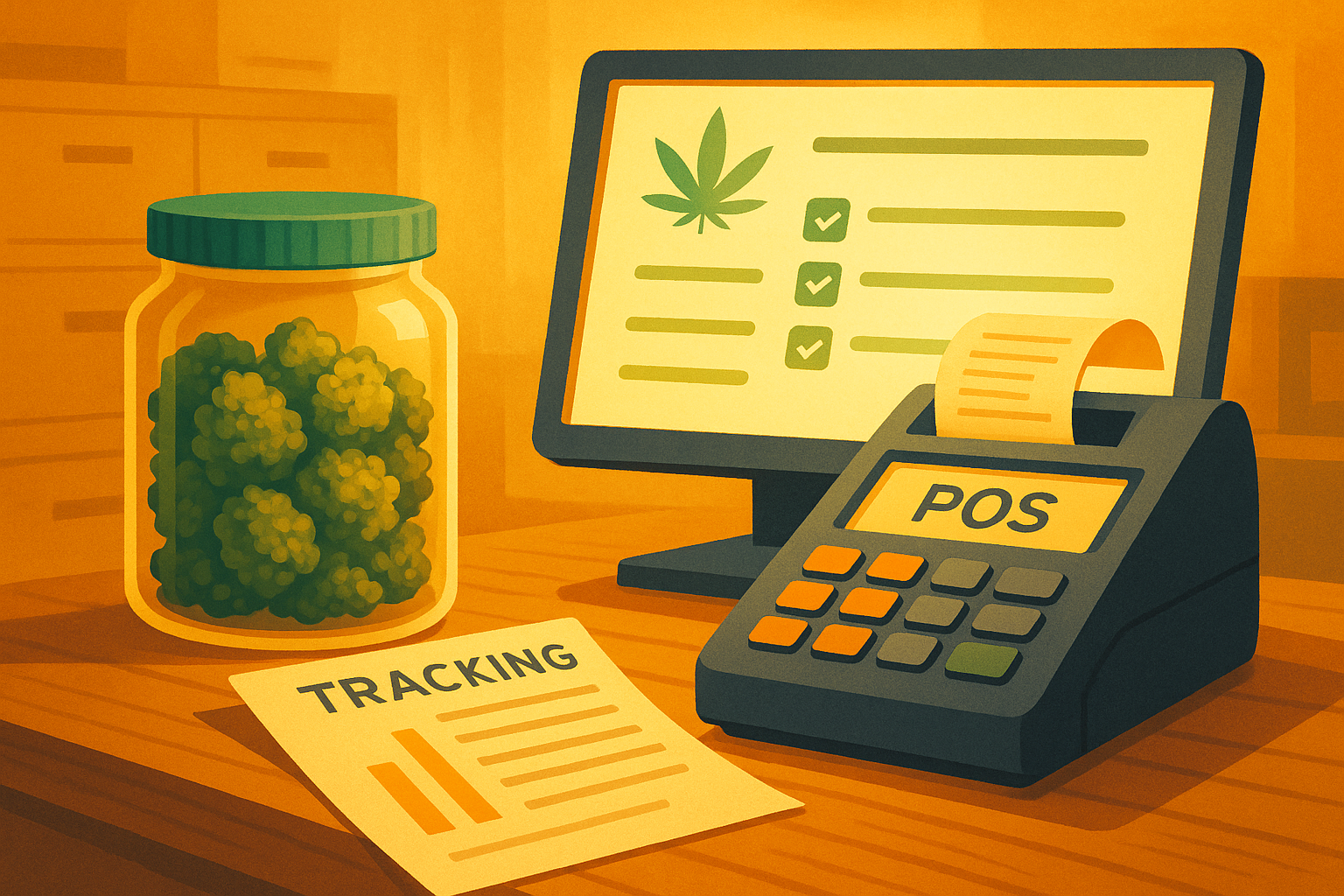
Medical cannabis dispensary software was built specifically to close that gap. It connects the point of sale, inventory, patient records, and state reporting into a single operational framework. When a budtender scans a product at checkout, the right system doesn't just process a transaction - it verifies the patient's purchase limits, deducts from inventory in real time, and pushes the sale data to the state's traceability system automatically. A well-designed medical marijuana point-of-sale platform treats compliance not as an add-on, but as part of every transaction by design.
This article covers how purpose-built dispensary software improves compliance at the point of sale, tightens inventory control, and gives operators the medical marijuana sales data they need to run a smarter, more defensible business. Whether you are opening your first dispensary or replacing a system that has outgrown your operation, understanding what these platforms actually do - and why it matters - is the place to start.
The Compliance Problem That Generic Software Cannot Solve
Why Standard Retail POS Systems Fall Short in Dispensaries
A typical retail POS system is designed to move products and collect payments. It tracks SKUs, processes cards, and generates receipts. For a clothing store or a hardware shop, that is sufficient. For a medical cannabis dispensary, it is dangerously inadequate.
Cannabis dispensaries operate under state-level regulations that mandate specific data capture at the point of sale - patient identification verification, purchase quantity limits tied to medical recommendations, and real-time reporting to seed-to-sale tracking systems like Metrc or BioTrack. A general-purpose POS system has none of these capabilities built in. Every workaround a dispensary builds around a non-compliant system is a liability waiting to surface during an inspection.
What Regulators Actually Require at the Point of Sale
State cannabis regulators typically require dispensaries to verify that a patient's medical card is current, that the quantity being sold does not exceed the patient's daily or period limit, and that the sale is reported to the state tracking system within a defined time window - often the same day or within hours. Some states require electronic verification of patient eligibility at the moment of sale, not as a manual check beforehand.
A cannabis compliance point of sale handles these requirements automatically. It queries the state's patient registry, checks the purchase against running totals, enforces quantity limits before the transaction completes, and transmits the required data to the traceability system without staff needing to manually enter anything. The difference between this and a manual process is not just efficiency - it is the difference between a defensible audit trail and a compliance gap.
The Cost of Non-Compliance
Cannabis license violations carry consequences that range from formal warnings and fines to license suspension. More practically, a single audit that reveals unreported sales or missing inventory records can consume weeks of management time in documentation and remediation. Dispensaries that have experienced license reviews often describe the experience as disproportionately disruptive relative to the original violation - which in many cases traced back to inadequate software rather than intentional misconduct.
Investing in medical cannabis dispensary software that enforces compliance at the transaction level is not a luxury. For a business that depends on maintaining its license to operate, it is a fundamental risk management decision.
How a Marijuana Retail POS System Works in Practice
Patient Verification and Purchase Limit Enforcement
When a patient approaches the dispensary counter, the first function of a marijuana retail POS system is identity and eligibility verification. The system scans or manually enters the patient's ID or medical card number, then checks it against the state registry to confirm the card is active and the patient is authorized to purchase. This happens in seconds.
Once the patient is verified, the system pulls their purchase history - specifically, how much they have already purchased within the state-mandated tracking period. As the budtender adds products to the transaction, the system calculates whether the total quantity or THC equivalent remains within the patient's legal limit. If it does not, the transaction is blocked before it completes. The enforcement is automatic, not dependent on a staff member remembering the rules.
Real-Time Integration With State Traceability Systems
Most state cannabis regulatory programs require dispensaries to report sales data to a central tracking system. The mechanics vary - Metrc uses tag-based tracking where every unit of cannabis carries a unique identifier from cultivation through sale, while other systems track at the batch level. What they share is the requirement for timely, accurate reporting.
A well-integrated cannabis compliance point of sale pushes sale records to the state system as transactions close, without requiring staff to log into a separate portal and re-enter data. This real-time or near-real-time integration eliminates the data entry errors and reporting delays that create discrepancies between a dispensary's internal records and the state's records - a mismatch that triggers scrutiny during inspections.
Audit Trails and Documentation
Beyond state reporting, a marijuana retail POS system maintains detailed internal transaction logs that support dispensary-side auditing. Every sale, return, void, and override is timestamped and attributed to a specific employee login. If a discrepancy appears in inventory or a regulator requests documentation for a specific date range, the system can produce a complete record.
This level of documentation is essentially impossible to maintain manually at any meaningful transaction volume. And because the records are structured and searchable, responding to an audit request takes hours rather than days.
Dispensary Inventory Management: From Receiving to Sale
Receiving and Tagging Incoming Product
Inventory management in a cannabis dispensary begins before any product hits the shelf. When a delivery arrives from a licensed cultivator or processor, the dispensary must verify that the incoming product matches the transfer manifest in the state tracking system. Quantities, strain information, batch numbers, and package tags all need to reconcile before the product is accepted into inventory.
Dispensary inventory management software handles this through a receiving workflow that scans incoming tags, compares them against the expected manifest, and flags discrepancies for review. Product that passes receiving is immediately entered into the system's live inventory count, making it visible to the POS for sales without requiring a separate manual update.
Real-Time Inventory Tracking Across the Sales Floor
Once product is in inventory, the system tracks it continuously. Every sale reduces the on-hand count for the specific product and batch sold. Dispensaries that sell by weight - common for flower - use integrated scales that record the exact weight sold and deduct it from the batch total. This precision matters because cannabis inventory is tracked at the gram level in most state systems, and rounding errors accumulate into reportable discrepancies over time.
Real-time tracking also supports operational decisions. Staff can see at a glance which products are running low, which batches are approaching expiration, and where inventory is concentrated. This visibility prevents both the experience of selling a product that has physically run out and the waste of letting product expire without being sold.
Managing Returns, Waste, and Adjustments
Not all inventory movement is sales. Product gets returned, damaged, or destroyed. Samples are used for staff training. In each case, the movement needs to be recorded accurately and, in most states, reported to the traceability system with a documented reason.
Dispensary inventory management software includes workflows for each of these scenarios, ensuring that every adjustment creates a documented audit trail. A waste event, for example, requires logging the quantity, the reason, and in some jurisdictions the witness. The software prompts for the required information and records it in a way that satisfies both internal management needs and regulatory requirements.
Low-Stock Alerts and Reorder Management
A dispensary that runs out of popular products mid-shift loses sales and patient trust. Conversely, overstocking ties up capital and increases the risk of product expiring before it can be sold. Good dispensary inventory management software addresses both risks through configurable low-stock alerts and reorder tracking.
When a product's on-hand quantity drops below a defined threshold, the system flags it for reorder. Some platforms integrate directly with distributor catalogs, allowing managers to initiate purchase orders within the same system. The result is a more disciplined procurement process that keeps inventory levels appropriate without requiring constant manual monitoring.
Medical Marijuana Sales Tracking: Data That Actually Drives Decisions
What Sales Tracking Captures Beyond the Transaction
Medical marijuana sales tracking in purpose-built dispensary software goes well beyond recording what was sold and for how much. Each transaction captures the product category, the specific strain or formulation, the method of consumption, the quantity, the price point, the time of day, and the patient profile - all of which can be analyzed in aggregate to reveal patterns that inform purchasing, staffing, and merchandising decisions.
For example, if sales data shows that a specific tincture consistently sells out on Friday evenings but sits on shelves mid-week, a manager can adjust ordering quantities and shift scheduling based on that pattern rather than intuition. This is not sophisticated data science - it is basic operational discipline made possible by having clean, structured transaction data.
Patient-Level Purchase History and Trend Analysis
For medical dispensaries specifically, patient-level purchase history has value beyond compliance. Understanding which products a returning patient consistently purchases, and how their purchasing behavior changes over time, informs conversations about product recommendations and helps dispensaries stock what their patient population actually needs.
Aggregate analysis of patient cohorts can reveal whether new patients tend to purchase differently from long-term patients, which product categories are growing in demand, and whether certain promotions shift purchasing behavior in meaningful ways. Medical marijuana sales tracking at this level transforms individual transaction records into a picture of how the dispensary's patient base is evolving.
Revenue Reporting and Financial Reconciliation
Accurate revenue reporting in a cannabis dispensary is more complicated than in most retail environments. Cash transactions are still common due to banking access limitations. Tip handling, discount structures, and split-tender transactions all need to be captured correctly. And the dispensary's financial records need to reconcile with its state-reported sales data - any gap between the two becomes a problem during a financial audit.
Medical cannabis dispensary software handles this through integrated end-of-day reporting that reconciles cash drawer totals, card transactions, and sales records simultaneously. Discrepancies are flagged immediately rather than discovered weeks later during a bookkeeping review. This daily reconciliation discipline is one of the less-discussed but practically significant benefits of purpose-built dispensary software.
Using Sales Data for Compliance Reporting
Sales data serves a dual purpose in cannabis retail: it informs business decisions, and it feeds regulatory reporting. Many states require dispensaries to submit regular sales reports - monthly or quarterly - that detail transactions by product type, quantity, and patient category. Generating these reports from a well-structured cannabis compliance point of sale takes minutes. Generating them from fragmented records is a multi-day exercise in data reconciliation.
When the same software that processes sales also generates compliance reports, the accuracy of those reports improves because there is no transcription step. The data that goes to the regulator comes directly from the transaction records, not from a manual compilation process that introduces opportunities for error.
Choosing the Right Medical Cannabis Dispensary Software
Key Features to Evaluate
Not all dispensary software platforms are equal, and the right choice depends on the specific regulatory environment of your state, the scale of your operation, and the integrations you need. That said, certain features are non-negotiable for any medical dispensary.
- Native integration with your state's traceability system (Metrc, BioTrack, or equivalent), with automatic sale reporting rather than manual export
- Real-time patient eligibility verification against the state medical registry
- Purchase limit enforcement at the point of sale that cannot be bypassed without a documented override
- Inventory tracking at the individual package and batch level with weight-based deduction for bulk products
- End-of-day financial reconciliation that compares cash drawer totals to transaction records
- Configurable reporting that can generate state-required compliance reports in the required format
- Role-based access controls that limit what each employee can see and do within the system
Integration With Other Dispensary Systems
A dispensary's software ecosystem typically extends beyond the POS. Online menus, patient intake forms, loyalty programs, and accounting software all need to connect to the core platform. When these integrations are reliable, data flows cleanly across the operation. When they are not, staff end up manually reconciling data between systems - which creates the same kinds of errors that purpose-built software is supposed to eliminate.
Before selecting a platform, evaluate which third-party integrations are native versus API-based versus manual. Native integrations maintained by the software vendor tend to be more stable than those built by third parties and more reliably updated when either platform changes.
Scalability and Multi-Location Support
A dispensary that opens a second or third location needs software that can consolidate reporting across locations while maintaining location-specific inventory tracking and compliance documentation. Some platforms are designed primarily for single-location operations and require significant workarounds to scale. Others have multi-location support built in from the ground up, with centralized management dashboards and shared patient records where state law permits.
If expansion is part of your business plan, evaluating scalability at the selection stage is far less disruptive than switching platforms once you have an established patient base and transaction history.
Implementation, Training, and Ongoing Support
The Implementation Process
Deploying medical cannabis dispensary software is not a same-day task. A proper implementation involves migrating existing inventory into the new system, configuring the state traceability integration, setting up employee access roles, and verifying that the POS hardware - scanners, scales, receipt printers - communicates correctly with the software. For a dispensary switching from one platform to another, data migration adds another layer of complexity.
Most established platforms provide an implementation timeline and a dedicated setup process. The realistic expectation is one to three weeks of active setup work before the system is fully operational, with additional time for staff to develop fluency. Rushing this process to meet an arbitrary go-live date typically results in configuration errors that create compliance problems later.
Staff Training Considerations
Compliance-critical software requires compliance-literate staff. A budtender who does not understand why the system is blocking a transaction - or how to handle an override appropriately - is a liability regardless of how good the software is. Training should cover not just the mechanics of how to use the system but why the compliance workflows exist and what the consequences of circumventing them are.
Role-specific training is more effective than one-size-fits-all sessions. Budtenders need fluency with the patient verification and transaction flow. Managers need to understand inventory adjustment workflows, end-of-day reporting, and how to read compliance reports. Whoever handles state reporting needs to understand the traceability integration deeply enough to recognize and resolve discrepancies.
Vendor Support and System Updates
Cannabis regulations change. State traceability systems update their APIs. New product categories emerge that require different tracking logic. The software platform you select needs to keep pace with these changes - and the vendor's track record of timely updates is a legitimate factor in the selection decision.
Before committing to a platform, ask specifically how the vendor handles regulatory changes in your state: how quickly they update the software, how they communicate changes to customers, and what support is available when a compliance issue arises. A platform that is slow to update after a regulatory change can leave a dispensary out of compliance through no fault of its own.
Frequently Asked Questions
What makes cannabis dispensary software different from a standard retail POS?
Cannabis dispensary software is built around compliance requirements that standard retail systems ignore entirely - patient verification, purchase limit enforcement, and automatic reporting to state traceability systems like Metrc. A standard POS processes transactions; dispensary software also enforces regulatory rules at the transaction level and generates the documentation regulators require.
How does the software prevent a patient from exceeding their purchase limit?
When a patient's ID is scanned at checkout, the system retrieves their cumulative purchase history for the current tracking period from the state registry or its own records, depending on the state's system. As items are added to the transaction, the software calculates whether the total quantity would exceed the patient's limit and blocks the transaction from completing if it would, before any product changes hands.
Can dispensary inventory management software integrate with Metrc?
Yes - most purpose-built dispensary platforms include native Metrc integration. This means that receiving manifests, sale records, inventory adjustments, and waste events are reported to Metrc automatically as they occur in the system, rather than requiring staff to log into Metrc separately and re-enter data. The quality of this integration varies by vendor, so it is worth confirming specifically how the integration works before selecting a platform.
What happens to inventory records when a product is returned by a patient?
Cannabis regulations in most states prohibit restocking returned medical cannabis products for resale, so a return creates an inventory adjustment rather than a quantity restoration. The software records the return, reverses the financial transaction, and creates a logged entry that the product was returned and must be destroyed or disposed of according to state rules. This adjustment is reportable to the state traceability system.
How does medical marijuana sales tracking support compliance reporting?
Most states require dispensaries to submit periodic reports detailing sales by product type, patient category, and quantity. When sales tracking data is structured correctly within dispensary software, these reports can be generated directly from the system in the required format, rather than requiring manual compilation from multiple records. This reduces reporting errors and the time required to prepare submissions.
Is cloud-based dispensary software safer than on-premise systems for compliance data?
Cloud-based systems generally offer automatic backups, regular security updates managed by the vendor, and access to data from multiple devices - all relevant to compliance documentation. On-premise systems give operators more direct control over data storage but require internal IT resources to maintain security and backups. Either architecture can meet compliance requirements; the more important factor is how the vendor handles data security, access controls, and disaster recovery regardless of where the data is stored.