Missouri's hemp retail sector spent its final legal week liquidating everything it could before a new state law pushed most hemp-derived THC products off store shelves entirely. The restriction, which took effect Thursday, confines sales of many intoxicating hemp products to the state's licensed marijuana dispensaries - a structural shift that effectively ends a parallel retail channel that had operated for years in gas stations, smoke shops and specialty hemp stores statewide.
A Retail Category Disappears in Days, Not Months
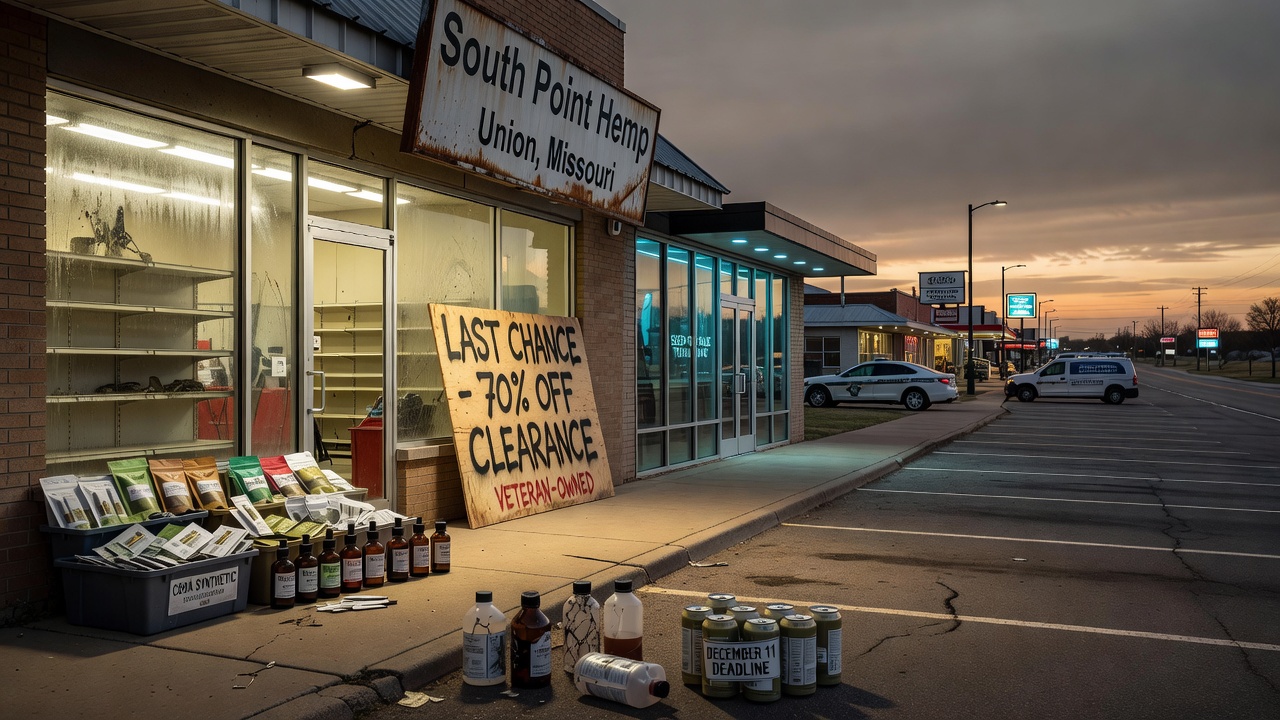
What's striking here is the speed of the wind-down. Clearance bins and "Last Chance" signage, some advertising discounts of 70% or more, appeared across the state as operators tried to convert remaining inventory into cash before it became unsellable. Brian Riegel, who owns South Point Hemp in Union and also serves as treasurer of the Missouri Hemp Trade Association, closed his store and liquidated stock this week. He described member businesses laying off staff who had been with them for years - not a single-store problem, but one hitting operators with multiple locations and the management structures that come with them. In Rosebud, a veteran-owned hemp business gave products away to fellow veterans on Veterans Day rather than sell down a final batch, calling the timing of the deadline, in their words, "the insult of all insults."
For an industry built on hemp-derived cannabinoids sold outside the regulated marijuana supply chain, this is the retail equivalent of a license revocation without the license ever existing in the first place. There's no appeal process for a product category.
Enforcement Will Target Sellers, Not Shoppers
Attorney General Catherine Hanaway's office holds primary enforcement authority under the new law, and she has signaled where the pressure will land. Consumers aren't the target; store owners and sellers are. Her office can pull in the Department of Health and Senior Services, the Department of Public Safety, the Division of Alcohol and Tobacco Control, and the Missouri State Highway Patrol as needed - a multi-agency posture that mirrors how states typically police unlicensed alcohol or tobacco sales rather than how they've historically handled hemp.
That matters for anyone still holding inventory. A gas station spotted selling discounted "THCA" vape cartridges that also contained CB9A - a synthetic cannabinoid compound - illustrates the compliance risk regulators are most focused on. Amy Moore, director of the Division of Cannabis Regulation, pointed to the broader shift in the hemp market since lawmakers first began debating intoxicating hemp rules in 2023: naturally extracted cannabinoids have increasingly given way to synthetic and semi-synthetic compounds, often cheaper to produce and far less understood from a toxicology standpoint. Moore's concern centers on byproducts from the conversion process - solvents and reaction agents that go untested in an unregulated market. Hanaway said her office's own product testing found potency levels inconsistent with labeling, and in some cases, heavy metal contamination.
What Carries Over, and What Doesn't
Not everything disappeared Thursday. Certain hemp beverages remain temporarily exempt under Missouri law, tied to a broader federal restriction scheduled to take effect Dec. 11 - unless Congress delays it again, as it has before. That distinction matters operationally: beverage brands and the retailers carrying them have a narrow, conditional runway that vape, edible and tincture sellers do not.
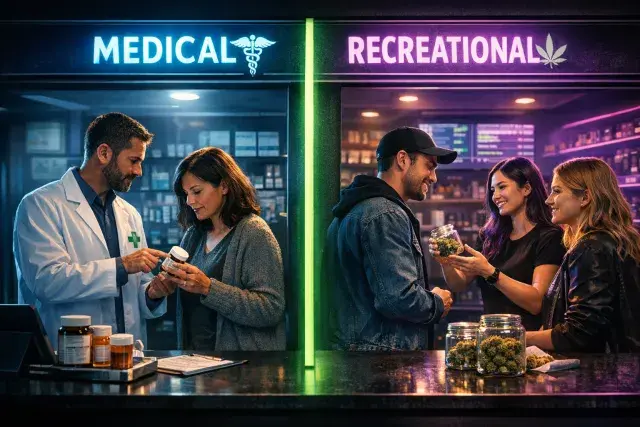
For dispensary operators holding Missouri marijuana licenses, the law effectively redirects a chunk of consumer demand toward the regulated channel, where seed-to-sale tracking, lab testing and compliant packaging are already baked into operations. For everyone else - convenience stores, smoke shops, independent hemp brands - the compliance bar didn't get higher. The product category got narrower, and the shelf space is already gone.