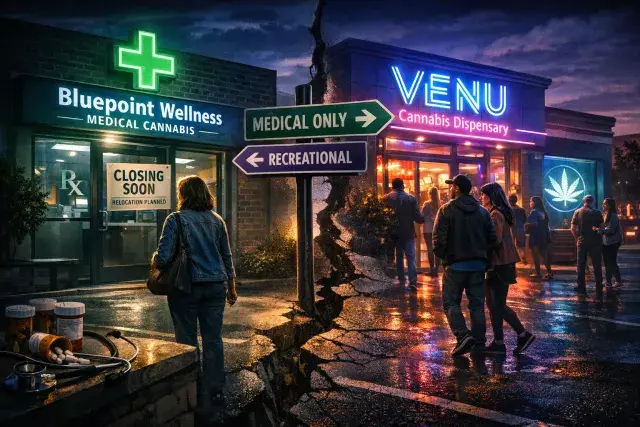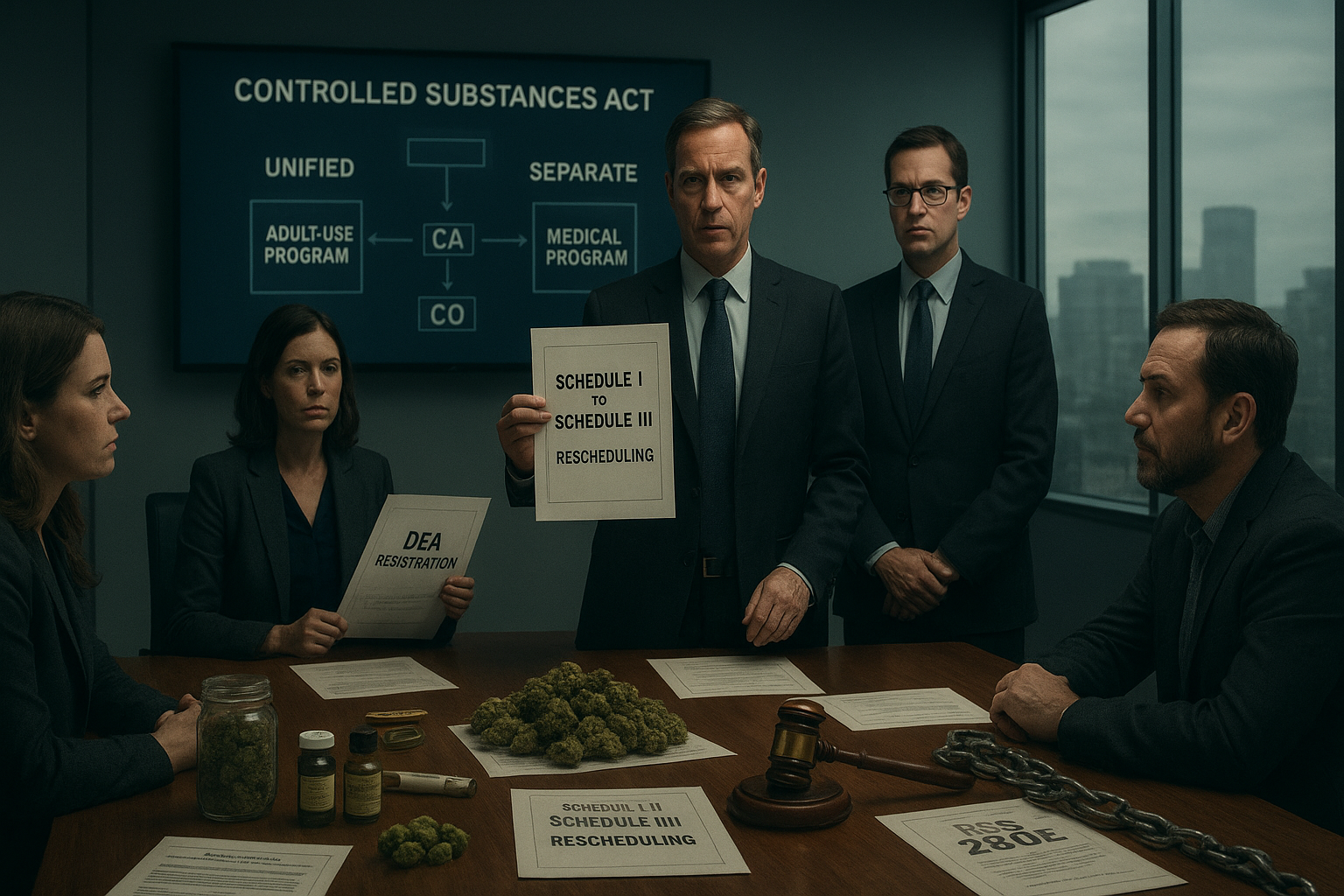
Washington state's Liquor and Cannabis Board has told cannabis businesses operating under its licenses that the Trump administration's recent federal rescheduling order - which moved certain state-licensed medical cannabis from Schedule I to Schedule III of the Controlled Substances Act - does not appear to cover them. The reason is structural, not political: Washington runs a unified adult-use market, not a separate medical program, and the federal rule was written specifically around "state medical marijuana licensees." That distinction, quiet as it sounds on paper, carries real financial consequences for hundreds of licensed operators in the state.
The DEA's registration process - the mechanism by which qualifying businesses would access Schedule III benefits, including relief from the punishing 280E tax provision - requires applicants to be licensed under a state medical marijuana program. Washington eliminated its standalone medical program years ago, folding medical access into a single adult-use framework where producers, processors, and retailers can manufacture and sell Department of Health-compliant products to adult patients and designated providers. There is no separate medical license category. Operators in other states using dedicated point-of-sale infrastructure, from cannabis dispensary pos alaska systems to California-specific compliance platforms, are grappling with similar questions about how their own market structures map onto federal rule language - but Washington's case is particularly stark because its licensing architecture leaves no obvious door open. The LCB was direct: "Washington's cannabis licensees do not appear to qualify as 'state medical marijuana licensee[s].'"
Here's the catch. The LCB isn't slamming the door shut, either. The agency explicitly stated it is not preventing licensees from applying for DEA federal registration if they choose to pursue it. What it is doing is managing expectations - and, notably, asking any licensee who does apply to report back on what they find. That's a regulator acknowledging the limits of its own visibility into a federal process it doesn't control. The LCB also made clear that the final determination on whether Washington's licensees qualify may rest entirely with the Department of Justice, not the state. DOJ has authority to interpret its own rule, and a future interpretation could theoretically include Washington operators - or exclude them definitively.
What 280E Relief Actually Means for Operators
For dispensary owners and licensed producers who have spent years under the weight of 280E, the stakes here are not abstract. Under current IRS rules, cannabis businesses classified under Schedule I cannot deduct ordinary business expenses - payroll, rent, marketing, utilities - from their federal taxable income. The effective tax rate for many cannabis retailers runs substantially higher than it would for a comparable non-cannabis business. Moving to Schedule III would eliminate that restriction for qualifying businesses. The Treasury Department and IRS have indicated they plan to issue new guidance following rescheduling, but that guidance will almost certainly track the same "state medical marijuana licensee" framework the DEA rule established. Washington operators are watching a financial relief door open - and being told, for now, it may not have their name on it.
A Regulatory Framework That Wasn't Built for This Moment
Washington's consolidated market structure was, in many ways, ahead of its time - simpler to administer, less prone to the dual-market arbitrage problems that have plagued states running parallel medical and recreational systems. But that structural simplicity is now creating a compliance wrinkle nobody anticipated. The federal rescheduling rule was written with states like California, Colorado, and others that maintain distinct medical licensing tracks in mind. Washington doesn't fit that template cleanly. California, for its part, recently adopted emergency rule changes specifically to align its medical licensing framework with the new federal criteria - a move Washington cannot easily replicate without fundamentally restructuring its market.
The LCB has been consulting with the Cannabis Regulators Association and the National Governors Association, and it was careful to note its current guidance is not Washington's final legal position. An administrative hearing scheduled for later this month will take up the broader question of moving marijuana to Schedule III more comprehensively, and ongoing litigation challenging the rescheduling process adds further uncertainty. In short: this is a regulatory situation in motion, and licensed operators in Washington should treat the LCB's current guidance as an honest snapshot of an unresolved question - not a final answer. The agency's candor about the limits of its own authority is, frankly, more useful than false certainty would be.
What Operators Should Do Now
For Washington's cannabis producers, processors, and retailers, the practical implication is watchful patience combined with proactive preparation. Operators who believe their businesses have a credible case for qualifying as state medical marijuana licensees - because they manufacture or sell DOH-compliant medical products within the adult-use framework - may want to consult legal counsel before the administrative hearing concludes. The LCB's guidance does not prohibit applications; it expresses doubt about eligibility. Those are different things. Meanwhile, tracking IRS and Treasury guidance as it develops will matter as much as watching the DEA process. 280E reform and Schedule III DEA registration are related but distinct pathways, and a business's eligibility for one does not automatically determine eligibility for the other. Operators should not assume the two move in lockstep.
The broader lesson here is one the cannabis industry has absorbed before: federal reform that looks clean from a distance tends to arrive with fine print. Washington's operators are not shut out yet - but they're working with meaningful ambiguity, on a timeline they don't control.