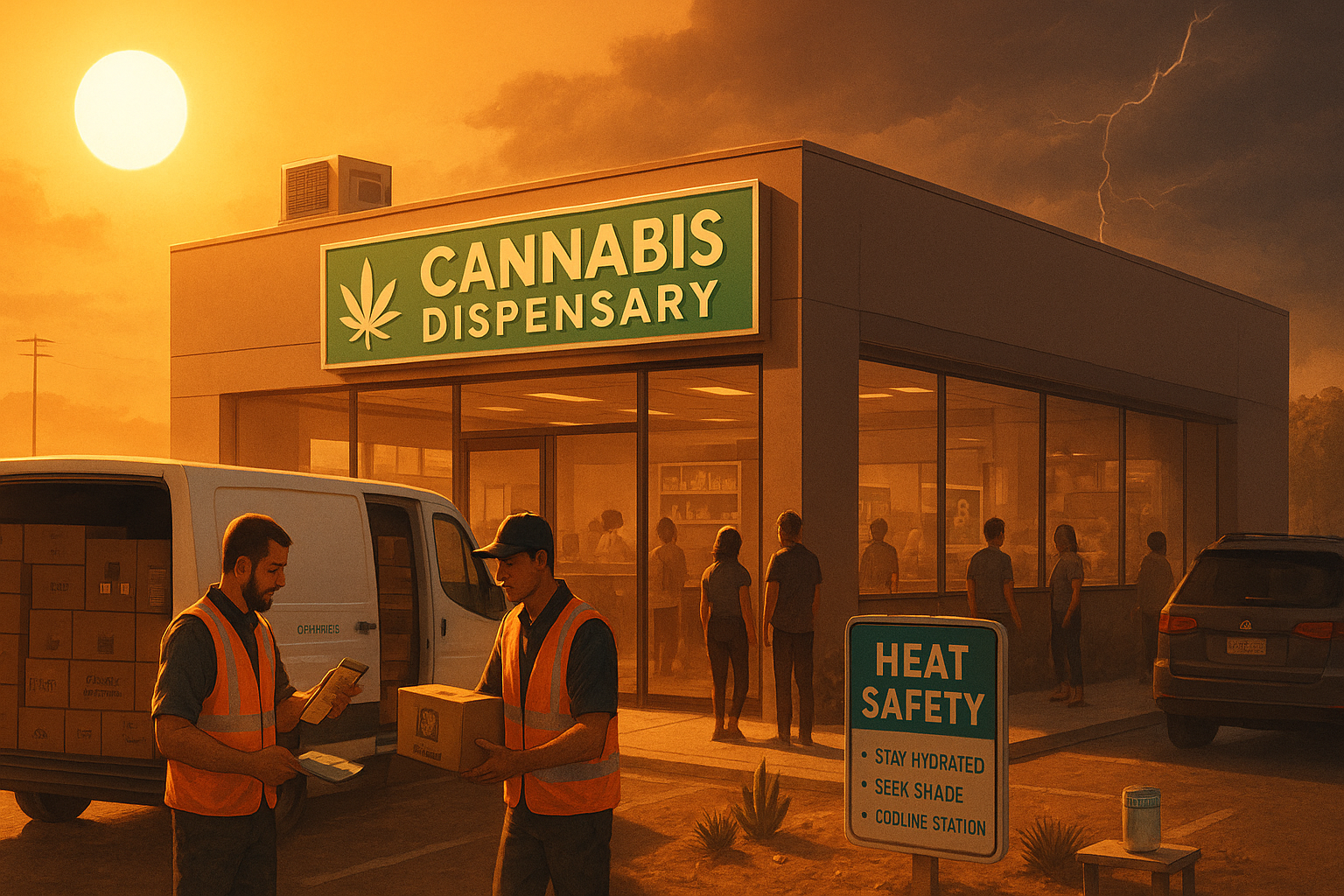
Summer arrives in Arizona this Sunday, June 21 - the summer solstice - and for licensed cannabis operators across the state, that date marks something more than an astronomical event. It signals the start of the most operationally demanding quarter of the year, when triple-digit temperatures reshape foot traffic patterns, stress cold-chain logistics, and push dispensary staff and customers alike to their limits.
Phoenix and the surrounding Valley regularly see daily highs well above 100°F from late June through August. That kind of sustained heat affects everything from how a dispensary manages its storefront hours and HVAC load to how products are stored, transported, and tracked through the seed-to-sale chain. Operators in warm-climate markets - whether they're running cannabis point of sale vermont integrations or managing Arizona-specific METRC compliance - understand that infrastructure decisions made in spring will determine whether summer runs smoothly or not. Heat-sensitive products, including certain edibles, tinctures, and vape cartridges, require climate-controlled environments at every handoff point in the supply chain, from the cultivation facility to the dispensary floor.
The summer 2026 forecast adds another layer of complexity. Multiple meteorological services - AccuWeather, The Old Farmer's Almanac, and the National Weather Service - are projecting a hotter and wetter summer for much of Arizona than typical seasonal averages. AccuWeather forecasts precipitation running as high as 150% of normal for most of the state. The NWS puts the probability of above-normal temperatures at 40% to 60% across Arizona's regions. Monsoon conditions, flash flooding, and sudden humidity spikes are all in play. For dispensary operators, that combination doesn't just affect the customer experience - it creates real logistical pressure on delivery windows, outdoor signage, parking lot safety, and the reliability of wholesale supply runs during weather disruptions.
What Extreme Heat Does to Dispensary Operations
The operational math shifts fast once temperatures climb past 110°F. Delivery drivers face shorter safe windows for transporting products, especially anything with a narrow temperature tolerance. Cold chain documentation - already a compliance requirement in many regulated states - becomes harder to maintain consistently during extended heat events. Inventory sitting in a vehicle between stops is a liability. One compromised batch is a write-off; several is a pattern that draws regulatory attention.
Inside the dispensary, HVAC becomes a critical system, not a background cost. Budroom environments need to stay within specific humidity and temperature ranges to preserve product integrity. A POS terminal crash caused by an overheating back-office server isn't just an inconvenience - it can halt compliant transactions entirely. Operators with aging infrastructure should already be stress-testing their systems before the peak heat months arrive.
Staffing patterns shift, too. Foot traffic tends to cluster in early morning and late evening hours as customers avoid midday heat. That pattern mirrors what the Arizona Department of Health Services recommends for outdoor activity generally: limit exposure to the hottest part of the day and focus physical activity between roughly 4 a.m. and 7 a.m. Dispensary managers who adjust staffing schedules accordingly - heavier early-morning coverage, lighter midday, stronger late-afternoon shifts - will be better positioned to handle the actual demand curve rather than a theoretical one.
Supply Chain and Monsoon Risk
Arizona's monsoon season typically runs from mid-June through late September, and 2026 projections suggest above-normal precipitation for most of the state. Flooding events, particularly in the southwestern regions AccuWeather flags as carrying "some risk" of inundations, can delay wholesale deliveries and disrupt distribution logistics in ways that don't always show up in pre-season planning.
Operators relying on just-in-time inventory management - carrying lean stock to minimize holding costs - are most exposed here. A two-day road disruption during monsoon flooding can create shelf gaps that aren't easy to fill quickly, especially if a license holder's approved wholesale supplier list is limited. Carrying a modest strategic buffer on high-velocity SKUs through July and August is a reasonable hedge. It's not a guarantee against disruption, but it buys time.
Heat Safety as a Compliance and HR Concern
Employee and customer safety during extreme heat carries direct compliance implications for cannabis retailers. Arizona's occupational safety framework includes employer obligations around heat illness prevention, particularly for outdoor-facing roles - think curbside pickup staff, security personnel, or delivery drivers who spend meaningful time outside. The Arizona Department of Health Services recommends a minimum of two liters of water daily for individuals staying indoors in cooled spaces, scaling up to one to two liters per hour for those working outdoors. Operators should formalize those standards internally, document them, and train staff accordingly.
Customer-facing heat safety is also worth thinking through. Parking lots bake in Arizona summers. A customer who spends too long waiting outside - whether for curbside pickup or in a queue - is a liability the dispensary may not have considered in its operating procedures. Clear signage, efficient queue management, and available shade or cooling near exterior waiting areas are practical, low-cost mitigations. None of them are required under cannabis regulations specifically, but they speak to the kind of operational professionalism that regulators and community relations both reward over time.
Summer in Arizona isn't a background condition. For cannabis operators, it's an active operational variable - one that touches logistics, staffing, product integrity, compliance documentation, and customer experience simultaneously. Treating it that way, rather than as a seasonal footnote, is the difference between a quarter that runs on plan and one that doesn't.