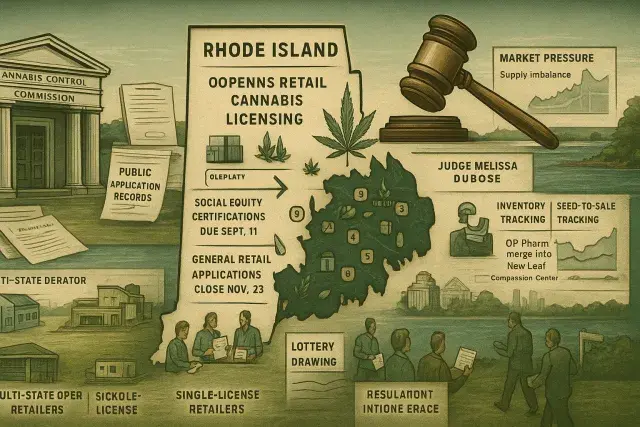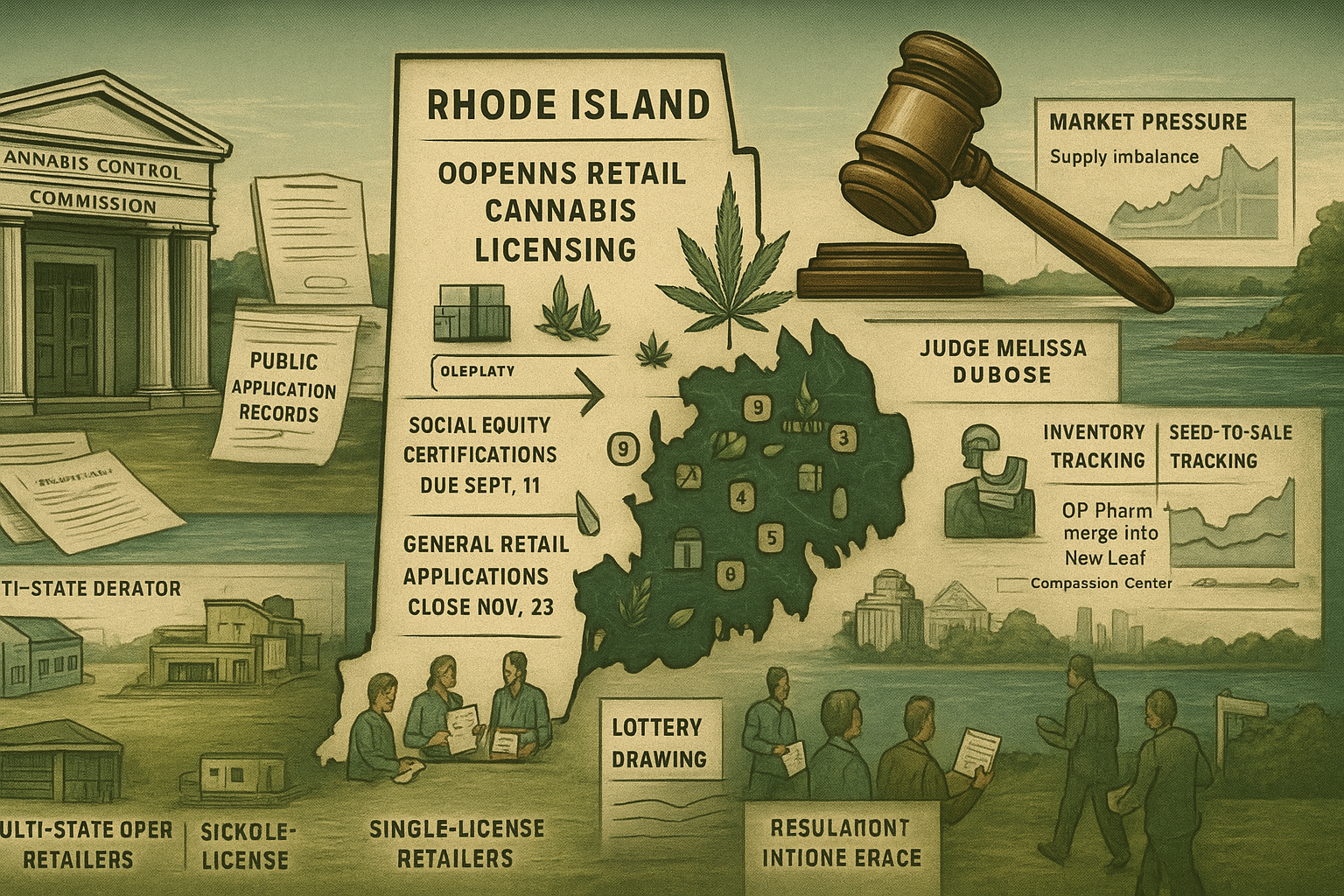
Rhode Island's retail cannabis licensing process is back on the clock. Applications for new dispensary licenses reopened after a federal court fight over residency requirements forced the state to scrap every application and social equity certification already submitted. The General Assembly had to rewrite the underlying statute before the Cannabis Control Commission could even think about restarting the clock, and now operators who have been holding real estate for years are back at square one alongside newcomers who never filed before.
The mechanics matter here. Social equity certifications are due September 11, and general retail applications close November 23 - a compressed window given what's riding on it. Once applications close, the Commission will run a lottery among applicants who clear baseline requirements, including secured real estate and proper zoning. That's not a small hurdle. Operators in other adult-use markets know that zoning compliance, local approval, and lease commitments often cost more in carrying expense than the license itself. For back-office readiness, many multi-state operators and single-license retailers alike are already thinking about infrastructure - inventory systems, compliance logging, point-of-sale integration - well before a license is even awarded, the same way operators building out in neighboring markets have leaned on POS software for Ohio cannabis retailers to get compliant retail operations running quickly once licenses clear.
Why the Residency Requirement Collapsed
The legal problem wasn't unique to Rhode Island. Federal courts in multiple jurisdictions have struck down residency requirements for cannabis licensing, generally on dormant commerce clause grounds - the idea that a state can't favor in-state residents over out-of-state applicants when regulating a lawful business activity. Rhode Island's law required at least one applicant on a license to be a state resident, and once that provision fell, the entire licensing round built on top of it became legally unstable. Judge Melissa DuBose's assessment was blunt: the Cannabis Control Commission pressed ahead with licensing despite repeated warnings from other courts. Calling the resulting fallout "self-inflicted" is about as sharp a rebuke as a regulator gets from the bench.
What Changed, and What Didn't
The General Assembly didn't just strip the residency language. It also reduced several implicit residency requirements embedded in the social equity application criteria, giving the Commission 60 days to reopen certifications and stand up a new application process. In practice, though, this creates a fairness problem that regulators haven't fully resolved. Applicants who've been paying lease costs on properties held specifically to qualify for the original lottery are now competing against fresh applicants with no such sunk costs. Everyone can see who applied where, too, since real estate and zoning are part of the public application record - hardly a comfortable position for operators who've been bleeding cash for years on a bet that never paid off the first time.
License Counts and Market Pressure
The state approved 24 retail licenses across six zones. The canceled lottery would have awarded only 20, since Zone 1 and Zone 4 didn't draw enough applicants. License types split between social equity, worker cooperative, and general retail categories - a structure meant to balance market access with equity goals, though it adds complexity to an already delayed process.
- Nine dispensaries currently operate statewide, six of them partially or fully vertically integrated
- Cultivator count has dropped to 55, down from 58 earlier this year
- OP Pharm, LLC merged into New Leaf Compassion Center, a vertically integrated medical marijuana compassion center
- Blackstone Valley Group did not renew its cultivation license
That vertical integration trend matters for wholesale pricing. When dispensaries grow their own product, they need less from independent cultivators, and with 55 cultivators still competing for shelf space at nine stores, supply is badly out of balance with retail capacity. Before the April derailment, the Commission was reportedly weighing whether to slow licensing further out of concern that new dispensaries would trigger price compression among existing operators - a defensible worry for incumbents, but cold comfort for cultivators who say they're barely holding on while waiting for more retail doors to sell into.
What Operators Should Watch Next
For anyone filing before November 23, the practical checklist hasn't changed much: secure a location, confirm zoning compliance, and prepare for a lottery process that rewards readiness over ambition. Compliance infrastructure - seed-to-sale tracking, POS systems capable of handling excise tax calculations, and clean inventory management - should be in place well before a license arrives, not scrambled together after. Rhode Island's cannabis market is small, tightly regulated, and now running on a reset clock. Operators who treat this reopening as a formality rather than a fresh competitive round may find themselves outpaced by applicants who spent the delay building operational capacity instead of waiting on litigation.