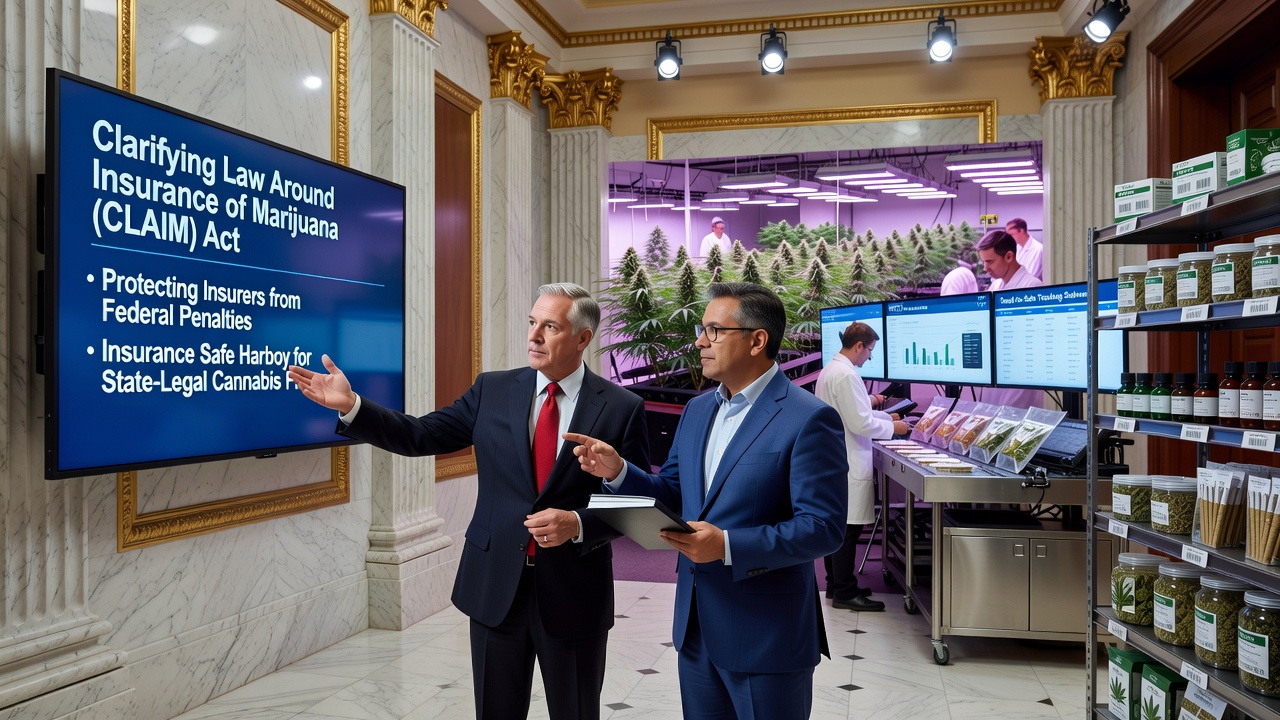
A bipartisan pair of U.S. senators has filed legislation to shield insurers from federal penalties for underwriting state-licensed marijuana businesses, tackling a coverage gap that has quietly strained dispensary operations for years. Sens. Kevin Cramer (R-ND) and Ruben Gallego (D-AZ) introduced the Clarifying Law Around Insurance of Marijuana (CLAIM) Act on Tuesday, marking the fourth consecutive Congress to see the measure filed. The bill would bar federal regulators from penalizing insurance carriers, brokers and agents simply for offering commercial products to cannabis-related businesses.
The mechanics here matter more than they might seem at first glance. Because marijuana remains federally illegal under Schedule I, many national insurers avoid the plant-touching sector entirely, worried about aiding and abetting exposure or asset forfeiture. That leaves operators scrambling for a thin bench of specialty carriers, often paying elevated premiums for property, casualty, and title coverage that a typical retail business would get at standard rates. For dispensary owners already managing tight margins under 280E tax treatment, that's not a minor line item - it's a structural cost baked into doing business. Multi-state operators building out compliant packaging lines, budroom inventory systems, and point-of-sale terminals need insurable assets to secure financing, and lenders routinely decline applications when adequate coverage isn't in place. Software providers tracking seed-to-sale compliance, including platforms like those behind marijuana retail software minnesota operators use to manage METRC reporting and inventory logs, sit downstream of this same insurance bottleneck, since lenders and landlords often want proof of both operational compliance and adequate liability coverage before signing off on leases or credit lines.
What the Bill Would Actually Change
The CLAIM Act would prohibit federal agencies from terminating or limiting insurance policies for cannabis companies or ancillary businesses based solely on the nature of their industry. It also extends liability protections to insurance company employees who service these accounts - a detail that matters for underwriters and claims adjusters who have historically worried about personal exposure. Separately, the bill requires the Government Accountability Office to study barriers facing minority-owned and women-owned cannabis businesses in licensing and financial services access, adding a social equity component that's become standard in recent cannabis banking proposals.
Why Insurance Access Ties Back to Consumer Safety
Coverage gaps aren't just a balance-sheet problem. Dispensaries lacking adequate liability and property insurance have less financial cushion to manage inventory shrinkage, product recalls, or facility incidents, and that indirectly affects consumer protection standards across the supply chain. Insurers that specialize in cannabis often require lab testing protocols, COA verification, and compliant packaging practices as underwriting conditions - effectively adding a private-sector layer of accountability on top of state regulatory requirements. Broader insurance market participation could push those standards further into the mainstream.
The Bigger Regulatory Picture
The bill lands alongside a separate cannabis banking measure filed last month and amid the Trump administration's ongoing rescheduling process, which recently moved state-licensed medical marijuana to Schedule III under an order from Acting Attorney General Todd Blanche. A DEA administrative law judge is now reviewing final briefs due August 17 before issuing a rescheduling recommendation. None of these efforts guarantees passage - cannabis reform bills have stalled in prior Congresses - but the pattern of repeated, bipartisan introduction suggests lawmakers view insurance and banking access as the more achievable fixes, even as full legalization proposals, including one from Sen. John Fetterman (D-PA), remain far less certain to advance.