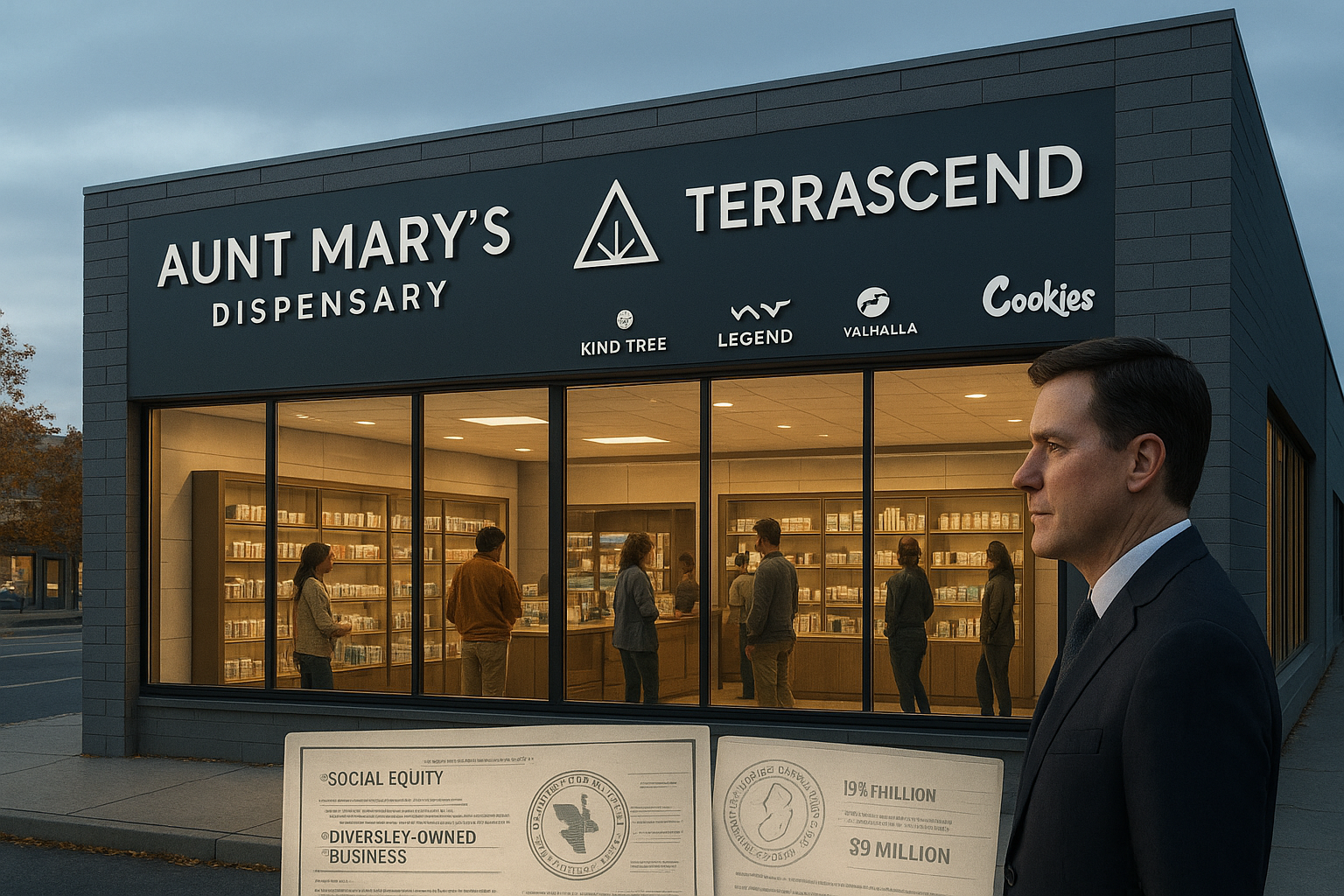
TerrAscend Corp. has signed an agreement to acquire Aunt Mary's Dispensary in Flemington, New Jersey, bringing the multi-state operator's in-state retail count to five locations if the deal clears regulatory review. The $9 million transaction - structured as a convertible note option followed by a cash payment - is designed to deliver immediate EBITDA contribution and is built around a vertical integration play that has become standard logic for larger cannabis operators looking to compress margins on brands they already own.
The deal's structure deserves a closer look, because it's not a straightforward cash acquisition. TerrAscend will first pay $3 million through a five-year unsecured convertible promissory note, which purchases an option to acquire a 35% interest in the business. Exercising that option triggers an additional $6 million cash payment. That phased approach is common in regulated cannabis markets, where state licensing timelines and change-of-ownership approval processes can stretch months - sometimes longer. New Jersey's Cannabis Regulatory Commission must sign off before any transfer of effective control is finalized, and operators in other regulated markets have learned that build-out timelines for regulatory review require flexibility in deal structures. Operators expanding retail networks elsewhere - including those evaluating compliant cannabis POS in Minnesota - are navigating similarly layered approval environments where deal mechanics and technology infrastructure have to align with state-specific compliance frameworks from day one.
What Aunt Mary's Brings to the Table
Aunt Mary's opened in February 2023, which means it's a relatively young operation - barely two years old at the time of the announcement. That it's generating more than $10 million in annualized revenue out of roughly 5,200 square feet of retail space in Hunterdon County is a meaningful data point. Flemington isn't a dense urban market; it's a mid-size borough in central New Jersey with the kind of high-traffic retail corridor that can anchor a regional dispensary draw. Strong per-square-foot revenue in a suburban setting typically reflects a combination of limited nearby competition, operational discipline, and a reasonably high average transaction value.
TerrAscend's executive chairman Jason Wild was direct about the margin opportunity: once the company introduces its in-house brand portfolio - Kind Tree, Legend, Valhalla, and Cookies - to Aunt Mary's shelf, wholesale costs for those SKUs effectively collapse from the operator's perspective. Vertical integration at the retail level means the dispensary stops paying external wholesale pricing on products TerrAscend cultivates and manufactures itself. That spread, multiplied across daily transaction volume, is where the EBITDA story actually lives. The 5,200-square-foot footprint also suggests room for a reasonably full product assortment without the operational overhead of a large-format store.
Regulatory Structure and Social Equity Compliance
TerrAscend noted that the transaction complies with New Jersey's regulatory framework governing investment in diversely owned cannabis businesses. That's not a throwaway line. New Jersey's Cannabis Regulatory Commission has built social equity and diversely owned business protections into its licensing structure, and any acquisition involving such an entity requires demonstrated compliance with those provisions. A deal that runs afoul of those requirements doesn't just fail to close - it can draw regulatory scrutiny that affects an operator's broader license standing in the state.
The phased ownership structure here - option purchase before full acquisition - may also reflect that framework directly. Allowing a diversely owned business to retain operational identity and partial ownership through a structured note, rather than executing an immediate full buyout, is one way operators have tried to thread the needle between growth ambitions and regulatory expectations. Whether that structure satisfies the Commission's requirements is ultimately a determination the regulator will make during its review. The closing conditions remain open.
What This Signals for New Jersey's Retail Market
New Jersey's adult-use market has attracted consistent operator interest since recreational sales launched in April 2022. The state's dense population, proximity to major metro areas, and relatively limited license count - especially in the early rollout phases - created strong unit economics for dispensaries that opened early and built customer habits before competition densified. Aunt Mary's 2023 opening put it in a competitive but not saturated window.
For TerrAscend, moving from four to five New Jersey locations adds geographic reach while keeping the company's footprint manageable enough to maintain operational consistency across stores. Compliance overhead - including seed-to-sale tracking through METRC, compliant packaging, age verification, and point-of-sale reconciliation requirements - scales with every new location, and operators who expand faster than their back-office infrastructure can support tend to surface compliance gaps that regulators notice. Five locations, with an established brand portfolio and an integrated supply chain already in place, is a defensible expansion cadence.
The broader implication for other New Jersey operators - and for brands and wholesalers working the state - is straightforward: consolidation activity continues, and dispensaries generating real revenue at the unit level are attractive acquisition targets. Operators who built clean compliance records, consistent financials, and diversified customer bases are the ones drawing this kind of structured attention. That's worth keeping in mind for any licensed business currently thinking about its long-term position in the market.