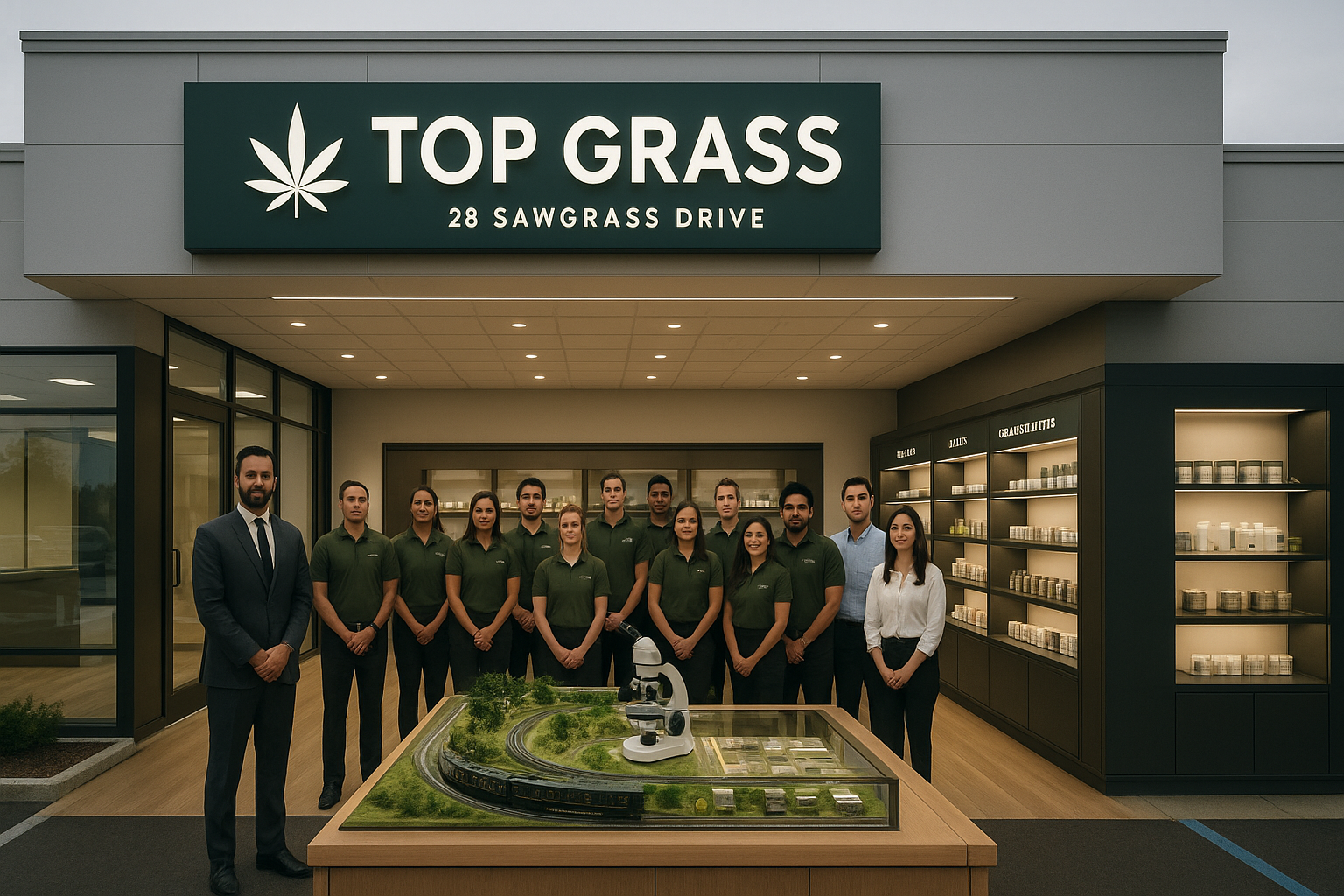
Top Grass, a new adult-use cannabis dispensary in Bellport, New York, opened its doors last Friday at 28 Sawgrass Drive - becoming one of only a handful of licensed retailers to successfully cut through Long Island's notoriously difficult permitting environment. Co-founders Pavandip Singh and Usman Whyen spent roughly a year moving from state license to certificate of occupancy, a timeline that, by Long Island standards, qualifies as relatively smooth. The opening adds one more data point to a regional market that has grown far more slowly than New York City, where hundreds of licensed dispensaries now operate.
Singh's background as a New York City general contractor gave him an edge that most aspiring dispensary operators simply don't have. Familiarity with the Department of Buildings - one of the more demanding municipal permitting bodies in the country - translated directly into his ability to satisfy the Town of Brookhaven's certificate of occupancy requirements, which the company secured on June 1. That kind of institutional literacy matters enormously in cannabis retail, where the gap between a state license and an open storefront often stretches well beyond a year. Operators in other regulated markets have invested in tools like Metrc-compliant POS for Massachusetts to handle the seed-to-sale tracking and compliance reporting that state regulators mandate - a reminder that technology and process discipline are as important as navigating local zoning. Singh bought the roughly 12,000-square-foot building on Sawgrass Drive in September 2024 for $2.7 million, committing serious capital months before the first dollar of retail revenue came in.
The 3,700-square-foot retail footprint inside that building includes a model train that carries product samples under a microscope for customer inspection - an unusual merchandising choice, but one that reflects a broader push among dispensary operators to differentiate the retail experience. With 11 employees at launch, Top Grass is operating at a scale consistent with most single-location adult-use dispensaries in New York. What will matter now is inventory management, product mix, and whether the operation can sustain the overhead on a building that cost nearly three million dollars before fit-out.
The Permitting Problem Hasn't Gone Away
Long Island's cannabis retail sector has lagged the rest of New York State for reasons that go beyond any single operator's experience. Legal disputes over where dispensaries may locate, opt-in decisions by individual municipalities, and a multi-agency approval process have collectively slowed the market's development. Only four towns in Suffolk County have opted into the state's adult-use retail licensing program. Nassau County towns have not yet done so, though that could change - and if it does, the number of viable retail sites on the Island would expand meaningfully.
Gahrey Ovalle, president of the Long Island Cannabis Coalition, has framed the issue plainly: the industry is being held to a standard that other retail businesses are not. That perception is common among cannabis operators across the country, where zoning boards, building departments, and fire marshals sometimes apply extraordinary scrutiny to licensed cannabis businesses that would not apply to a pharmacy or a liquor store selling products under comparable regulatory frameworks. The result, in practice, is that operators with construction experience, legal resources, and patient capital survive the process. Many others don't.
Investor Disputes, Settled - and What They Reveal
The path to opening Top Grass was not linear. Singh and Whyen originally partnered with two other investors - Surinder Sandhu and Ravinder Singh - with plans dating to 2022. That arrangement broke down. Court filings show Singh and Whyen accused Sandhu and Ravinder Singh of blocking retail locations to reduce competition for Strain Stars, Long Island's first cannabis dispensary, where Ravinder Singh's children hold shareholder positions. The counter-claim alleged stalling in the site search. The matter settled out of court.
This kind of early-stage investor conflict is not rare in cannabis. The combination of long licensing timelines, high capital requirements, and limited retail sites creates exactly the conditions in which partnership disputes escalate. When one investor group has a stake in an existing licensed dispensary, the potential for competing interests is structural, not incidental. Operators and attorneys advising new entrants should treat governance documents - operating agreements, buy-sell provisions, site approval rights - as compliance infrastructure, not afterthoughts.
What the Market Looks Like From Here
The contrast with New York City is striking. Manhattan's adult-use market has become crowded enough that commercial real estate brokers specializing in cannabis report real difficulty finding available space. Long Island is nowhere near that point. The slow permitting pace has kept supply constrained, which means the dispensaries that are open - Strain Stars among them - have generated substantial revenue with limited local competition. Top Grass enters a market where demand exists but where the number of licensed storefronts remains low relative to the region's population.
That won't last indefinitely. As more operators complete the permitting process - a timeline Ovalle and local land use attorneys say will eventually deliver additional openings - Long Island's competitive dynamics will shift. Local municipalities collecting cannabis excise tax revenue have a financial incentive to see the market grow; those tax dollars are real and already being collected from existing operators. The question for incoming retailers is whether they can build customer relationships and operational efficiency before the field broadens. For Top Grass, the clock started Friday.