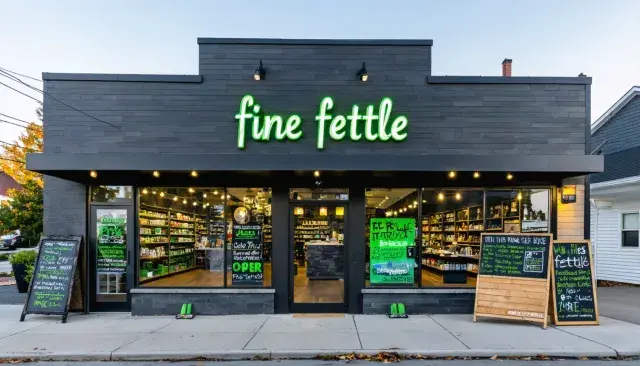
Fine Fettle is completing a full conversion of its Connecticut retail footprint, with all nine of its dispensaries in the state now operating as hybrid facilities serving both registered medical marijuana patients and adult-use customers. The change takes effect Thursday and follows regulatory updates that allow recreational cannabis retailers in Connecticut to obtain hybrid status - a designation that had previously been reserved for operators who entered the market through the state's original medical program. For multi-location operators weighing similar moves, Fine Fettle's conversion offers a live case study in what hybrid operations actually require.
What the Regulatory Shift Actually Allows
Connecticut's medical marijuana program predates adult-use legalization, and for years the two retail tracks ran largely parallel - separate license types, separate facility requirements, separate patient populations. The regulatory change that enabled this conversion lets adult-use licensees add medical services without acquiring a legacy medical dispensary license or a separate facility. That's a meaningful structural shift. It means operators no longer have to choose between serving recreational customers and serving patients; they can do both under one roof, provided they meet the compliance requirements each track carries.
Those requirements aren't identical. Medical patients in Connecticut must hold a physician certification and maintain active registration with the state. At the dispensary level, hybrid operations typically require pharmacist consultation services, separate inventory tracking for medical and adult-use product batches, and point-of-sale systems capable of distinguishing between the two customer classes for tax and purchase-limit purposes. Medical patients are generally permitted to purchase larger quantities per transaction than adult-use customers, and they pay lower effective tax rates - both of which the POS and compliance infrastructure must correctly enforce at every terminal, on every transaction.
A Shrinking Medical Market - and Why That Makes Hybrid Status More Appealing, Not Less
The timing here is worth examining. Connecticut's medical marijuana sales fell 22.6% in 2025 to $72.5 million, down from $93.6 million the prior year. Medical's share of total state cannabis revenue dropped from 32% to 25%. That's a pronounced contraction, and it follows a pattern common in maturing adult-use markets: once recreational purchasing becomes broadly accessible, some patients who had enrolled primarily for access - rather than for the specific tax, quantity, or consultation benefits - migrate to the adult-use channel or simply stop purchasing from licensed retailers.
On its face, that trend might seem like an argument against investing in medical infrastructure. The opposite case is actually more persuasive for established operators. As the medical patient population consolidates, the patients who remain registered tend to be the most condition-specific, highest-frequency, and most service-dependent buyers - exactly the customers for whom pharmacist access, larger purchase limits, and lower tax rates matter most. Operators who don't serve them will simply lose them to the dwindling number of facilities that do. Fine Fettle's chief operating officer, Benjamin Zachs, framed it as a coverage problem: patients in some markets where the company operates were traveling significant distances or facing limited options. Hybrid conversion addresses that directly.
Operational Realities for a Nine-Location Conversion
Converting five additional locations - Manchester, Norwalk, Old Saybrook, Waterbury, and West Hartford - to hybrid status isn't a paperwork exercise. Each facility needs to satisfy the state's requirements for medical operations, which typically include staff training on patient consultations, updated compliance documentation, and any physical or operational changes the state requires to maintain patient privacy or separate patient-facing services. The four locations already operating as hybrids give Fine Fettle an internal operational template, but replicating it across five sites simultaneously carries execution risk that any multi-state operator would recognize.
Inventory management gets more complicated, too. Medical and adult-use product lines may overlap at the SKU level, but their compliance trails don't. Seed-to-sale tracking through METRC must correctly tag inventory allocated to each program. Purchase limits, tax calculations, and patient verification steps all need to run cleanly through the POS at the counter - in real time, with staff who are trained and confident in the distinction. A compliance error at a hybrid facility - selling a medical patient quantity under adult-use rules, or misapplying a tax rate - can generate audit exposure that neither the operator nor the state's Cannabis Compliance Commission wants to deal with.
What This Signals for Connecticut's Retail Market
Connecticut's overall cannabis sales declined modestly in 2025 - $290 million versus $293.6 million in 2024 - even as unit sales grew 11.8% to 8.69 million units. That combination, more products sold at lower aggregate revenue, reflects the price compression common to adult-use markets as competition increases and wholesale prices soften. Operators feeling margin pressure in that environment have obvious incentive to add revenue channels that carry structural advantages. Medical customers, with their tax differential and higher purchase limits, represent one such channel - small in total market share but disproportionately valuable on a per-transaction basis for operators equipped to serve them correctly.
Fine Fettle's move also sends a signal to competitors across Connecticut's licensed retail base. Hybrid capability is now available through regulatory channels; operators who haven't evaluated whether it fits their locations and patient demographics should probably do that analysis now. The medical market is contracting, but it isn't disappearing - and as access points become fewer, the operators holding hybrid licenses will have structural advantages the rest won't. That's not a guarantee of revenue. It's just the reality of serving a regulated market where access is defined by licensure.