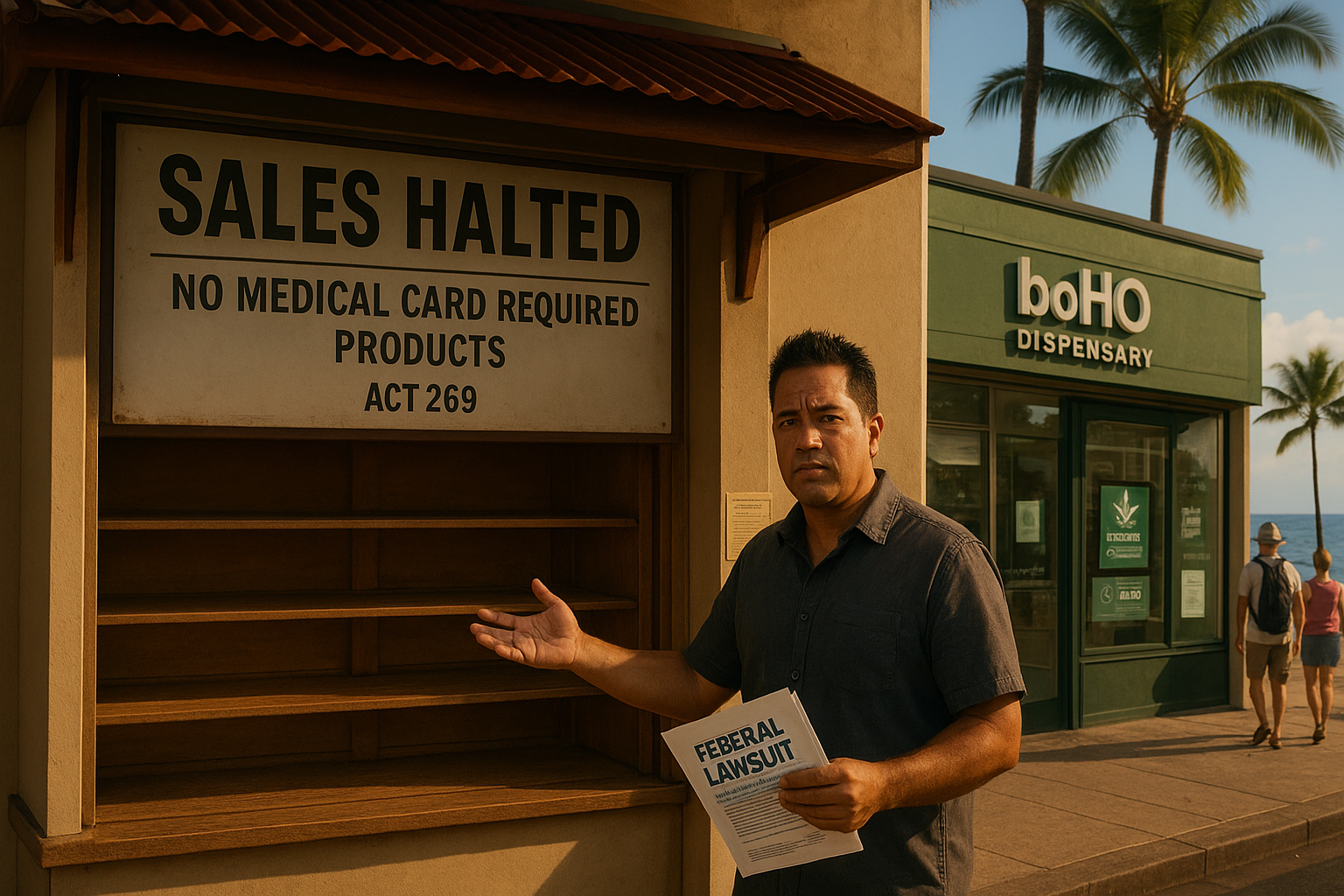
The Hawaiʻi Department of Health has moved to halt sales of intoxicating hemp-derived products - pre-rolled cigarettes, gummies, drinks - that had been sold openly at dozens of retail shops across the islands without a medical marijuana card. The crackdown, now the subject of a federal lawsuit filed by Oʻahu Dispensary and Provisions owner Lance Alyas, has emptied shelves at kiosks in Waikīkī and elsewhere, cutting off a market that had grown faster than regulators could track it.
For operators watching this play out from other states, the Hawaiʻi dispute is a case study in what happens when a regulatory gap closes overnight. Licensed dispensaries elsewhere have spent years building compliance infrastructure - seed-to-sale tracking, lab-tested batches, age-gated point-of-sale systems - while unlicensed hemp retailers operated with none of that overhead. That asymmetry is exactly what Hawaiʻi's licensed dispensary operators say let unregulated shops undercut them on price. Multi-state operators evaluating new markets, including ones running a Pennsylvania dispensary POS platform to manage inventory across regulated and adjacent product lines, know how quickly compliance mandates can reshape a retail footprint when regulators decide enforcement can no longer wait. Pennsylvania dispensary POS platform
How a Federal Loophole Became a State Enforcement Fight
The 2018 Farm Bill legalized hemp containing no more than 0.3% delta-9 THC by weight, a threshold meant to distinguish industrial hemp from marijuana. In practice, though, manufacturers found ways to concentrate hemp-derived cannabinoids into gummies, vapes and beverages that delivered intoxicating effects while staying under that weight-based limit. Hawaiʻi's 2020 hemp law permitted cultivation but never authorized sale of hemp-based THC products - a distinction that got lost as the national market ballooned and retailers here began stocking shelves anyway.
Act 269, passed this year with backing from law enforcement and licensed dispensary operators, gave the Department of Health's Office of Medical Cannabis Control and Regulation new authority: registration requirements for all cannabis retailers, plus the power to inspect stores and order noncompliant products removed. Regulators frame this as closing an enforcement gap, not writing new law. Alyas frames it as protectionism dressed up as public safety, benefiting the eight licensed medical dispensaries that have operated under a state-imposed license cap for a decade.
What Operators and Compliance Teams Should Watch
Hawaiʻi's fight sits inside a larger reckoning. Congress has already moved to redefine hemp under a bill signed this year, effectively closing the loophole that let hemp-derived THC products proliferate nationally - a shift with implications well beyond Hawaiʻi. For operators and compliance officers elsewhere, a few things are worth tracking:
- State-level enforcement can arrive suddenly even when federal law appears settled, as Hawaiʻi's retailers just learned.
- Untested hemp-derived products carry consumer-safety exposure that licensed, COA-backed medical and adult-use channels are built to address through lab testing and compliant packaging.
- License caps and "underserved area" carve-outs, like the one Noa Botanicals used to open a new Waikīkī location, remain a recurring flashpoint between incumbents and challengers.
- Federal hemp redefinition, now delayed into December, will force retailers nationwide to reassess SKU management and wholesale sourcing for hemp-derived inventory.
Whether Alyas' supremacy-clause and dormant commerce clause arguments succeed in federal court remains unresolved. What's clear is that Hawaiʻi's licensed dispensary channel - smaller, more tightly regulated, and increasingly marketed like a consumer lifestyle brand rather than a medical program - is trying to reclaim ground it lost to an unregulated market that, for a while, nobody was policing at all.