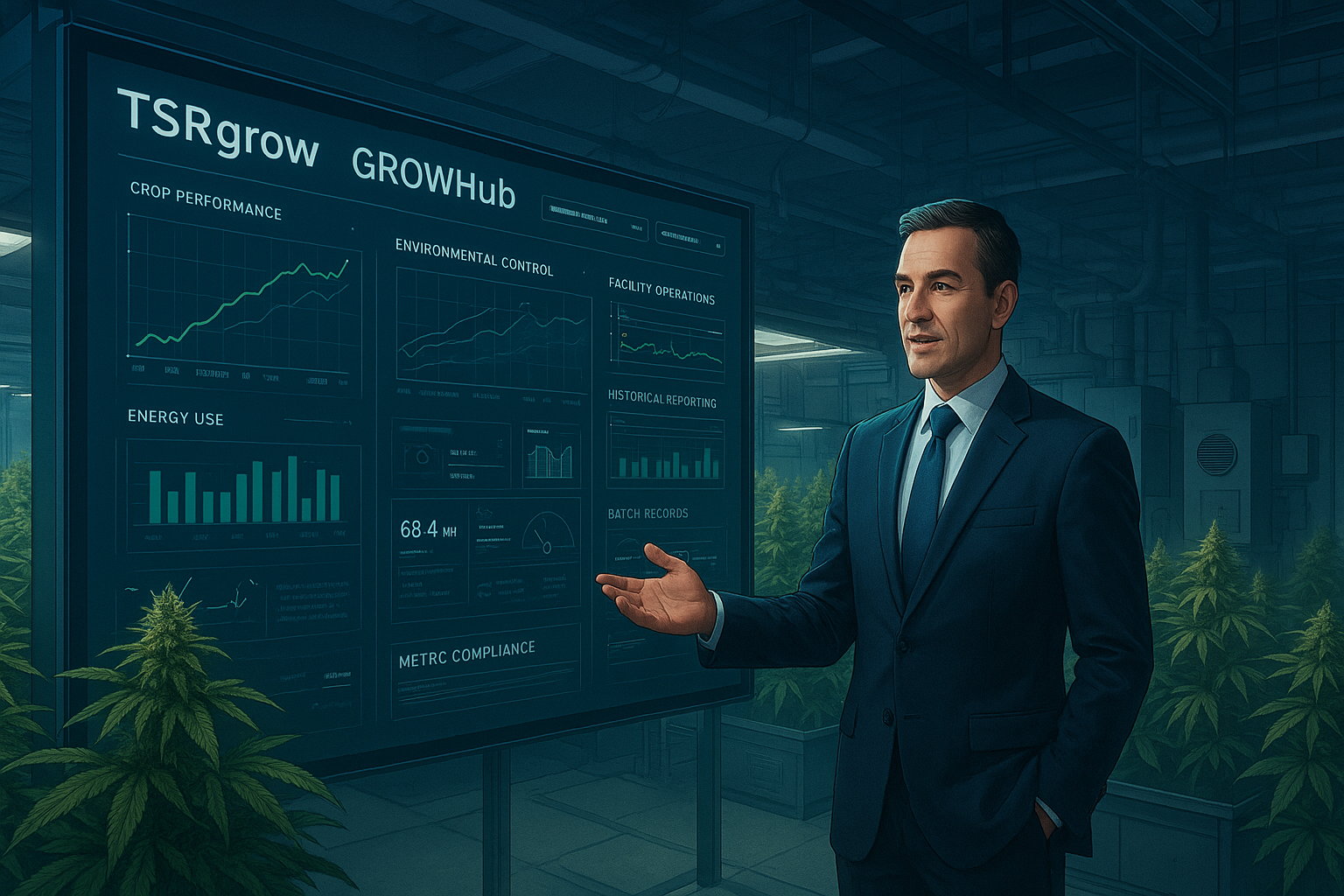
TSRgrow has rolled out a significant 2026 upgrade to GROWHub, its cultivation software platform, adding features that pull crop performance, energy use, facility operations and compliance recordkeeping into one connected system. For commercial cultivators, the update addresses a persistent operational headache: data scattered across lighting controllers, spreadsheets, environmental sensors and separate compliance software that rarely talk to each other.
The expanded platform builds on GROWHub's existing role as the software layer behind TSRgrow's LED lighting and Remote Power infrastructure. New capabilities include advanced analytics and historical reporting, expanded batch-record functionality, Metrc integration, energy monitoring and Building Management System connectivity. That last piece matters more than it might sound - cultivation facilities increasingly run on the same kind of layered technology stack seen in retail operations, where a dispensary might rely on separate point-of-sale, inventory and compliance systems that don't share data cleanly. The same fragmentation problem shows up on the retail side of cannabis, where operators managing platforms like cbd store point of sale software maine have had to solve for connecting sales data with state tracking requirements. Cultivation is now catching up to that same integration pressure.
Why disconnected systems have become a liability
Here's the catch with cultivation software that grew up piecemeal, one module at a time: it works fine until an operator needs a complete answer fast. A regulator asks for batch history. An investor wants yield trends across facilities. An auditor flags a discrepancy in energy costs against production output. When lighting controls, environmental logs and compliance records sit in separate systems, someone on staff ends up reconciling it all manually, usually under deadline pressure. That's not just inefficient - it's a documentation risk in an industry where recordkeeping gaps can trigger compliance findings.
Mikhail Sagal, CEO of TSRgrow, framed the update around that exact problem. "Cultivators are generating more data than ever, but too often that information lives in separate systems," he said. GROWHub's expanded batch-record capabilities let operators organize cultivation conditions, settings and operational data around individual crop cycles, while Metrc integration ties that information directly to state track-and-trace workflows. In practice, though, the real value isn't the integration itself - it's what operators can do with a clean, traceable production history when reporting requirements shift or an audit request lands unannounced.
Energy data enters the compliance conversation
Indoor cultivation is energy-intensive, full stop. Lighting, HVAC and dehumidification systems drive a meaningful share of a facility's operating costs, and utility scrutiny of high-load cannabis operations has grown alongside the industry itself. By connecting energy monitoring directly to Remote Power infrastructure, GROWHub lets growers evaluate lighting energy consumption alongside cultivation and environmental data rather than treating utility bills as a separate accounting exercise. Expanded BMS connectivity extends that logic further, letting cultivation data exchange with broader facility systems instead of living in an isolated silo.
What this signals for operators facing more scrutiny
The timing isn't incidental. As the industry braces for potential changes tied to federal rescheduling and continued state-level compliance tightening, reliable and traceable cultivation records are becoming table stakes rather than a nice-to-have. Sagal put it plainly: "Compliance should not exist separately from cultivation." For multi-state operators managing several facilities under different state regulatory frameworks, a platform that documents production history automatically - rather than relying on manual logs assembled after the fact - reduces both labor overhead and audit exposure.
None of this changes the underlying reality that cannabis cultivation remains a heavily regulated, closely tracked business. Software can consolidate data and reduce manual error, but it doesn't substitute for sound cultivation practices, accurate lab testing or diligent compliance staff. What it does offer is a more defensible paper trail - and in a regulatory environment where recordkeeping gaps carry real consequences, that's not a small thing.