Fresh Venture Farms in Ontario, Canada, has raised bell pepper production by an average of 16% over four years through targeted water quality improvements. The propagator credits cavitating ultrasonic transmitters, nanobubble technology, and reduced hydrogen peroxide use for healthier roots and higher yields. These changes cut costs and enable full water recycling, pointing to sustainable paths for greenhouse operations.
Cavitating Ultrasound Transforms Irrigation Water
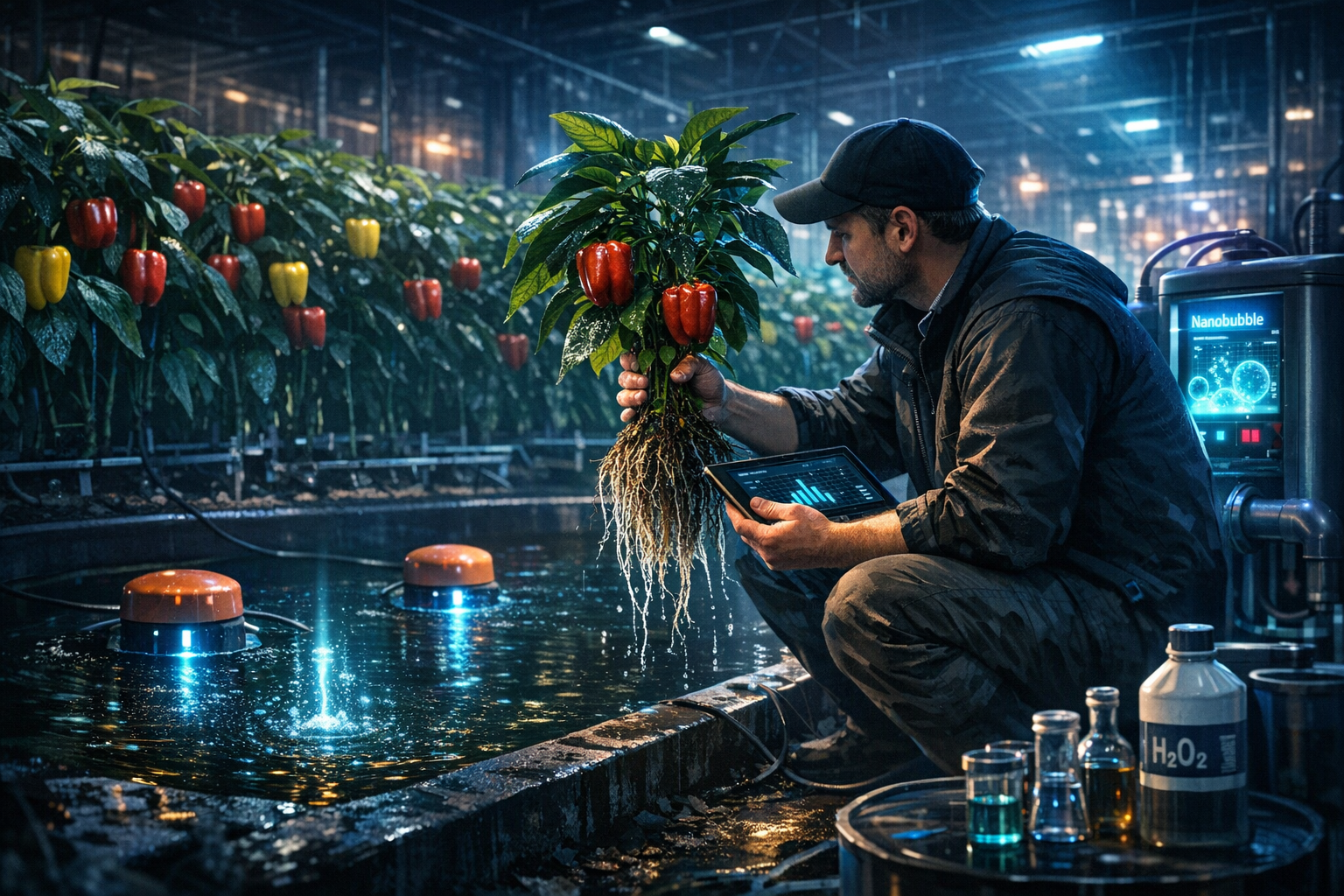
The farm partnered with Ultramins over four years ago to deploy USAF™ DT-100 transmitters, which use cavitation and ultrasound to treat water. Grower Florian Locher started with units in the source pond, then expanded to two for silos and five for daily supply. Orange buoys suspend the devices underwater, disrupting pathogens without chemicals. Locher reports H₂O₂ consumption dropped more than 50%, saving $0.10–$0.15 per square meter annually. By 2025, production should reach 35+ kg per square meter.
Root Health and Pathogen Elimination Drive Gains
Photos show stark root improvements over the growing season, with no synthetic agents needed due to absent pathogen issues. DNA sequencing from A&L Laboratories confirmed high Fusarium and Pythium levels in untreated samples, proving the transmitters' effectiveness. This shift reduced costs per square meter by 40–50%, with return on investment under six months. Locher adds regular 35% hydrogen peroxide to daily supply but skips other disinfectants, achieving 100% water recycling.
Sustainable Practices Reshape Greenhouse Economics
Last year's nanobubble technology investment complements the ultrasound system, streamlining irrigation and easing operations. Locher calls it a no-brainer for peers, as clean water eliminates pathogen worries. In controlled environments like bell pepper greenhouses, such methods address recirculation risks, where tainted water spreads disease rapidly. Broader adoption could lower chemical reliance industry-wide, aligning with demands for efficient resource use amid water scarcity pressures.