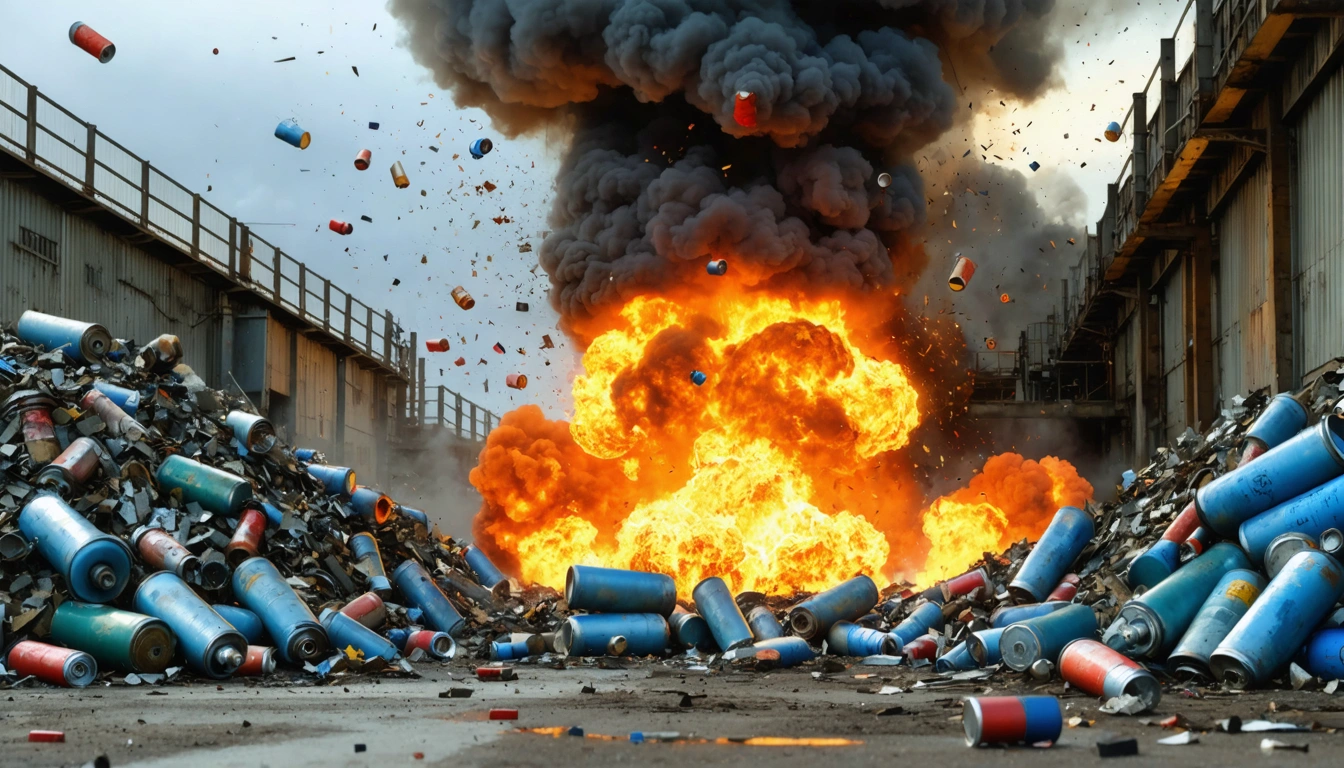
In Metro Vancouver, improperly discarded nitrous oxide (N₂O) canisters are triggering dangerous explosions in solid waste facilities, endangering workers and crippling operations at the Waste-to-Energy plant in Burnaby. This escalating issue, confirmed by Paul Henderson, General Manager of Solid Waste Services, demands urgent action to protect public safety and infrastructure.
The Hidden Dangers in Waste Processing
These high-pressure cylinders, ranging from 8-gram whippets to three-litre industrial units, enter the garbage stream illegally. Under compaction in trucks or transfer stations, they rupture from mechanical shock. Worse, at the incinerator, intense heat causes rapid gas expansion, leading to blasts that damage conveyors and shredders.
- Up to 21 explosions reported in a single 24-hour period at one facility.
- Risks include shrapnel injuries, fires, and chemical exposure for waste workers.
- Productivity losses from downtime strain the region's waste management capacity.
Causes Tied to Recreational Trends
Marketed as whipped cream chargers, N₂O canisters have surged in recreational use as "laughing gas" whippets, especially among younger demographics at parties. Users discard them casually, ignoring safety data sheets warning of explosion risks from pressure or heat. This mirrors broader cultural shifts toward inhalant misuse, overwhelming urban waste systems ill-equipped for pressurized hazards.
Compaction mimics heating by breaching containment, turning routine processing into high-stakes danger zones.
Path Forward: Education and Infrastructure Fixes
Environmental leaders must drive public education, stressing full depressurization before disposal—via dispensers for small units or open valves for larger ones. Never pierce or cut them at home.
- Advocate retailer take-back programs and point-of-sale instructions.
- Promote free depot drop-offs for empty canisters with visible puncture proof.
- Invest in AI sorting tech to detect and divert metal cylinders pre-incineration.
By treating these as household hazardous waste, Metro Vancouver can safeguard operations, curb contamination, and align with safer waste trends across North America.