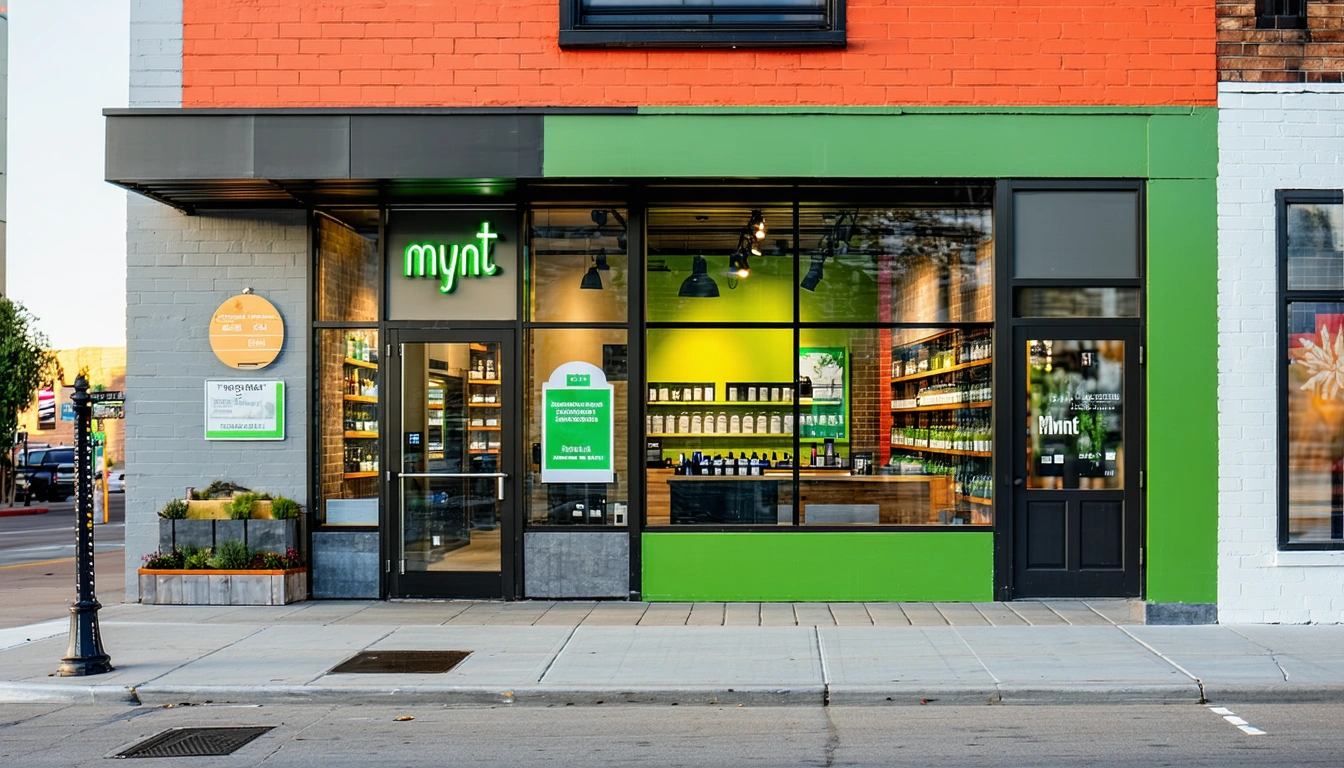
A new 3,300-square-foot medical marijuana dispensary is set to open February 17 on East Second Street in downtown Reno, positioning itself squarely in one of Nevada's most trafficked tourist corridors. Mynt Dispensary, at 132 E. Second St., sits across from the Greater Nevada Field ballpark and a short walk from the Truckee River - prime real estate for a business whose legal reach extends well beyond state lines.
Why Location Is Everything Here
The thing is, most medical marijuana dispensaries are tucked into industrial corridors or suburban strip malls, deliberately distanced from the public eye. Mynt is doing the opposite. Its owners chose a block flanked by a Vietnamese restaurant, a pawn shop, and the Cal-Neva - not exactly the Miracle Mile, but a stretch of downtown that draws foot traffic from hotels, the river walk, and both major regional hospitals nearby.
"It was entirely about patient access," said co-owner Scott Dunseath, who also runs retailer Reno Envy. "It's near downtown, near the river and equidistant from both hospitals. It's also close to the hotels, where visitors who might be patients are staying."
That last point matters more than it might first appear. Nevada is among a small handful of states that extend medical marijuana access to out-of-state cardholders - not just residents. That statutory provision puts Northern Nevada's dispensaries in a structurally different position from those in most other states, where reciprocity is either absent or narrowly written. For a tourist economy built around hotel stays, casino floors, and a $5.99 steak, it's a meaningful competitive distinction.
The Ownership Group and What They're Building
Mynt is the retail arm of a larger local cannabis enterprise. The dispensary's co-owners - Mark Pitchford, Joanna O'Neal, physician Dr. Sean Devlin, and Dunseath - are also principals of Kynd Cannabis Co., a Reno-based cultivation and extraction operation. The broader ownership structure brings in Cannabis product brand Strainz, founded by husband-and-wife duo Hugh and Chris Hempel, alongside Prestige Worldwide, a permitting and lobbying firm co-owned by Clint Cates, Kiera Sears, and attorney Joey Gilbert.
It's a vertically integrated model, or close to one: the same group grows it, extracts it, brands it, and now sells it. That arrangement is fairly common in states with mature cannabis regulatory frameworks, where operators who control multiple points in the supply chain can manage margins more effectively than pure-play retailers.
The interior reflects a deliberate identity. Naturally cut oak slabs serve as counters, stone mosaic runs through the rooms, and vintage photographs of downtown Reno will hang on the walls. The space was originally built as offices in 2006 and sat abandoned through the recession. What's striking here is the intentionality: this isn't a sterile clinical dispensary built to clear a compliance checklist. The owners are pitching an aesthetic.
Retail Marijuana Is Coming - But Not Yet
Mynt opens as a medical-only operation, at least for now. Nevada voters passed Question 2 in November 2016, legalizing recreational marijuana and permitting possession of up to one ounce of cannabis or an eighth-ounce of concentrate for adults. Medical cardholders retain a higher possession allowance - 2.5 ounces. But the Nevada Department of Taxation had not yet finalized retail regulations at the time of the dispensary's launch, meaning recreational sales remain on hold across the state.
The Mynt team intends to apply for a retail distribution license as soon as the application window opens, which the owners anticipated could arrive as early as late spring or early summer. Fair enough - the regulatory lag is largely procedural, and the direction of travel is not in doubt. When retail sales do open, dispensaries with established downtown locations will have a structural advantage over competitors in less accessible areas.
A Blighted Block and a Longer Bet
East Second Street carries some of the visual weight of a post-recession downtown: vacancies, foot traffic from transient populations, storefronts that haven't been updated in years. Co-owner Clint Cates was direct about it. "With everything being rundown or vacant, it's kind of a blighted area," he said. "We want to help redevelop East Second Street."
The dispensary has installed several dozen cameras inside and outside the building - a practical response to the security realities of the block, and a requirement that comes with operating a cash-intensive, regulated business in any urban environment. Cannabis dispensaries, by federal banking law, remain largely cut off from conventional financial services, which compounds the security calculus considerably.
Whether one business can anchor a block's redevelopment is an open question. But the bet Mynt is making - that a well-designed, accessible dispensary in a dense tourist area can draw from both local patients and out-of-state visitors while contributing to the physical fabric of a struggling street - is at minimum a coherent one. Downtown Reno has seen stranger things work.