Every dispensary sale, however it starts, ends up running through the same piece of infrastructure: the point of sale system. That software and hardware stack is not just a cash register with extra steps. It is the operating system of the business, the layer that connects checkout, inventory, compliance reporting, and customer data into one continuous record. For operators weighing a new provider, or trying to get more out of the one they have, understanding what actually happens under the hood matters.
What a Cannabis POS Is Actually Built From
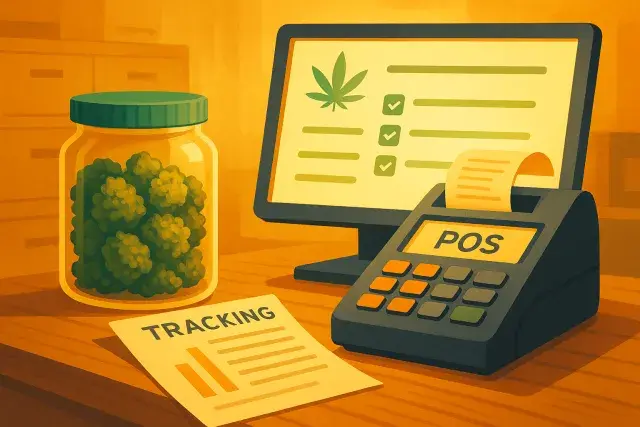
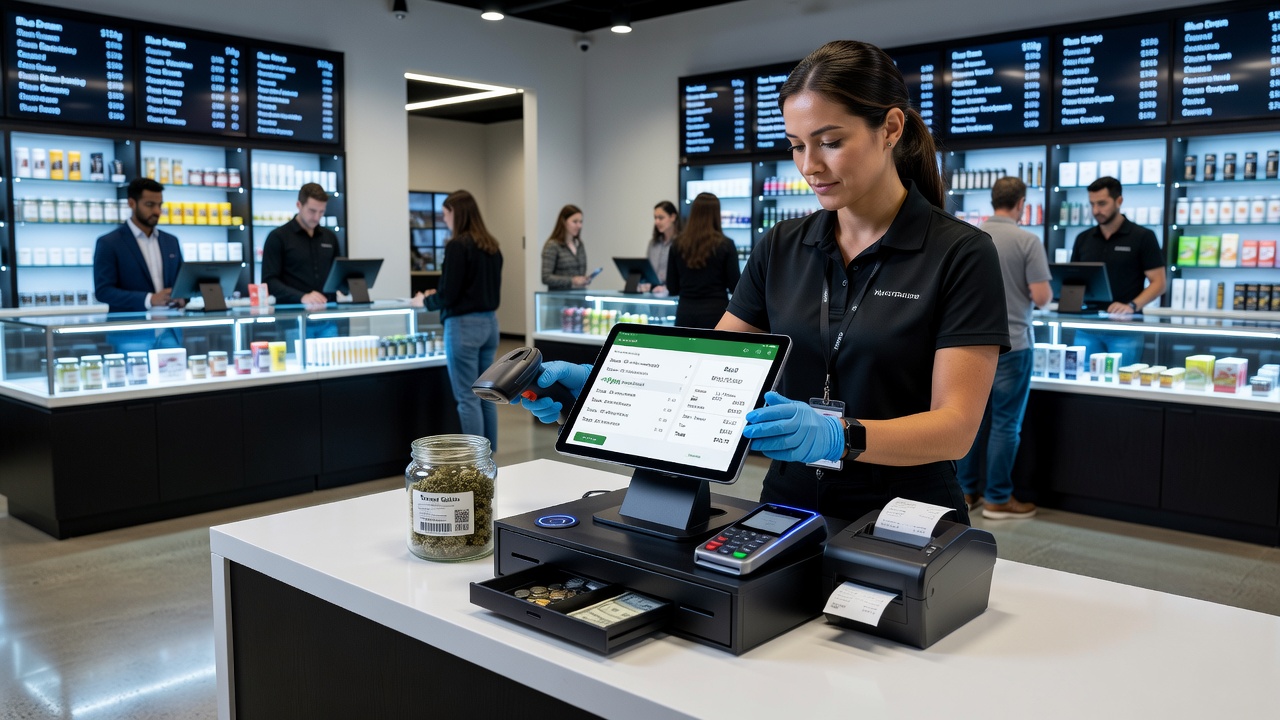
A dispensary POS splits into two halves: software and hardware. The software is the logic layer - it calculates totals, tracks sales, monitors inventory, and in more advanced platforms, handles loyalty programs, reporting, payment integration, and real-time Metrc compliance. Hardware is the physical side: POS terminals (now mostly tablets rather than bulky legacy units), barcode scanners, receipt printers, cash drawers, and payment processing equipment. The two halves have to work as one system. A dispensary payment processor that is not actually integrated with the POS software creates friction at the counter, and friction at the counter is where errors and shrinkage tend to start.
Hardware That Still Matters, Even in a Cashless Push
Cannabis remains a cash-heavy category in many markets, federal banking restrictions have seen to that, so a cash drawer is still standard equipment even as pay-by-bank and other cashless options gain ground. Barcode scanners earn their keep in stores with large catalogs, cutting down on manual entry errors that can throw off inventory counts. Receipt printers have not disappeared either; digital receipts are the norm now, but plenty of customers still want paper.
What Happens, Step by Step, When a Budtender Rings a Sale
Before a single item hits the screen, the POS verifies the customer's ID and checks state purchase limits for the day. That compliance gate happens automatically on a modern system, which matters because manual age and limit checks are exactly where human error creeps in. From there, the budtender builds the order, scanning or searching products as the system captures item, quantity, and price in real time. Payment comes next, and on an integrated system, the payment amount passes straight from POS to processor without anyone re-keying numbers. That single detail, integrated versus non-integrated payments, is a bigger deal than it sounds. Manual re-entry slows the line and opens the door to reconciliation mismatches at closing.
Once payment clears, the system closes the transaction and issues a receipt, usually digital, often with loyalty points applied automatically in the background. The customer walks out. The sale, meanwhile, keeps working: inventory counts update, transaction data gets logged, and in licensed markets, the state traceability system gets notified.
Compliance Doesn't Stop at the Register
Here is the part that separates cannabis retail from nearly every other regulated consumer category: every sale is also a compliance event. States run different traceability systems - Metrc in many markets, BioTrack in others, CCRS in Washington, plus a handful of state-built platforms - and a POS has to speak whichever language the local regulator requires. A system that reports in real time removes the end-of-day reconciliation scramble that used to eat up manager hours and reduces the odds of discrepancies that invite regulatory scrutiny. For operators running stores across multiple states, that flexibility is not optional. It is the difference between a platform that scales with you and one that becomes a liability the moment you cross a state line.
Where AI Is Actually Changing Dispensary Retail
The most consequential shift in POS technology right now is not a new terminal or scanner, it is software that acts on data rather than just recording it. Demand forecasting tools can flag reorder points before shelves go empty. AI-assisted intake can match incoming packages against state manifests automatically, cutting down the hours operators used to spend on manual receiving. At the counter, AI-driven recommendations can surface relevant loyalty offers in the moment rather than leaving budtenders to remember promotions on their own. None of this changes the core job of the POS: ring sales, track inventory, stay compliant. It just does that job with less manual labor and fewer points of failure, which for a margin-squeezed, 280E-burdened retail category is not a small thing.
- Integrated payments cut manual re-entry errors at checkout
- Real-time state reporting reduces end-of-day reconciliation risk
- AI-assisted receiving speeds up product intake and catalog accuracy
- Demand forecasting helps prevent stockouts and overordering
- Compliance checks for age and purchase limits run automatically at the register
For operators evaluating their current setup, the practical question is whether the POS is actually being used to its full capacity. Training, support resources, and staying current on new releases matter as much as the initial purchase decision. A powerful system left half-configured delivers little more than a legacy terminal with a nicer screen.